Custom vs. Ready-Made Chandeliers: Which Is Right for You?
A chandelier ordered from an online catalog, rated for a standard ceiling, hangs from a reinforced bracket in an entry six meters up and still sways slightly whenever the air conditioning kicks on. The chandelier itself was fine. It simply wasn’t sized for that room. That gap, between what a fixture is designed to do and what a space actually needs, is where the custom versus ready-made question starts.
Most people don’t think about lighting as an engineering decision until they’re standing in a room too large for anything off a shelf. At that point the real question is whether a custom chandelier, with its extra cost and longer wait, buys something the room genuinely needs that a ready-made chandelier can’t, or whether it’s paying for a label.
What Sets Custom Chandeliers Apart From Ready-Made Options
| Factor | Ready-Made Chandelier | Custom / Bespoke Chandelier |
|---|---|---|
| Design | Pre-designed catalog options | Designed around the specific space |
| Sizing | Fixed diameters and drop lengths | Fully tailored dimensions and proportions |
| Ceiling Height | Best suited to standard ceilings | Suitable for high, double-height, and unusual ceilings |
| Materials & Finishes | Limited to available manufacturer options | Wider choice of crystal, metal, finishes, and details |
| Structural Requirements | Generally designed for standard mounting | Mounting and structural requirements can be planned into the design |
| Lead Time | Usually faster, depending on stock | Longer due to design, approvals, manufacturing, and finishing |
| Upfront Cost | Generally lower | Generally higher |
| Design Process | Select from existing models | Consultation, drawings or 3D visualization, revisions, and production |
| Best For | Standard rooms, secondary spaces, rentals, and tighter timelines | Grand entries, atriums, staircases, luxury residences, hotels, and statement spaces |
| Main Trade-Off | Less flexibility | Higher investment and longer lead time |
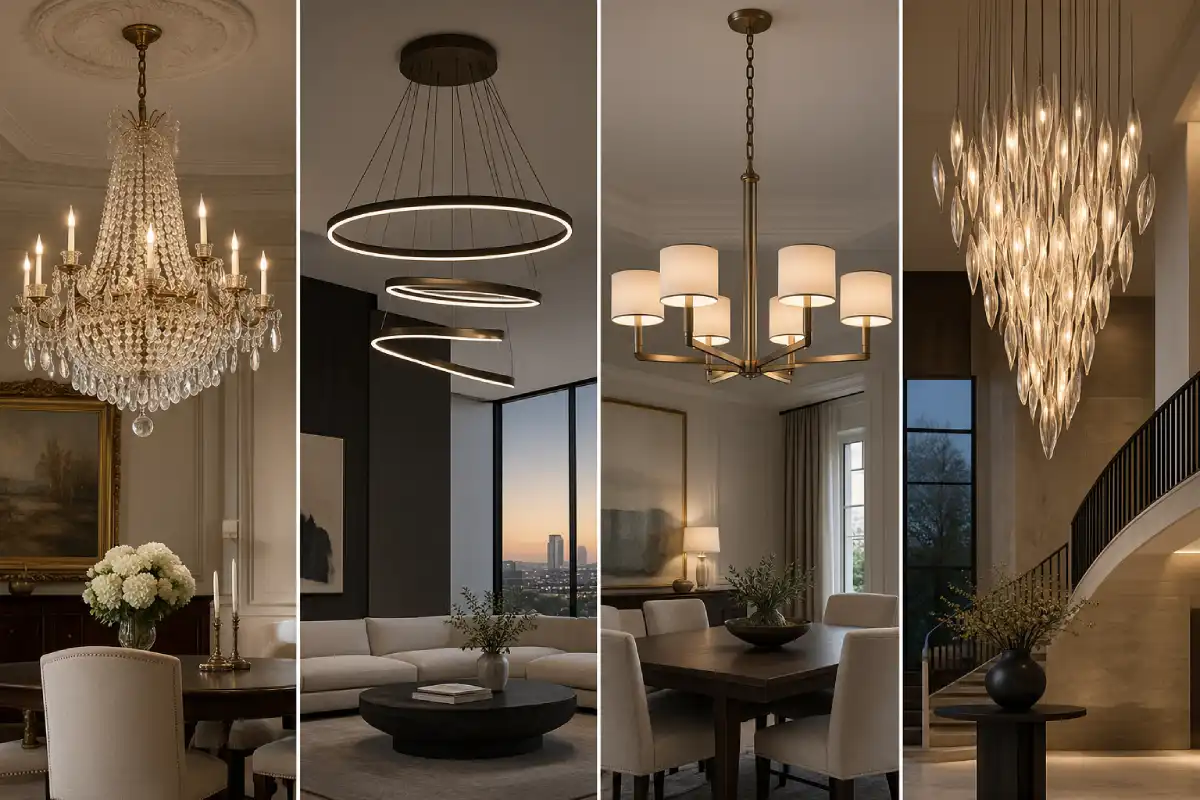
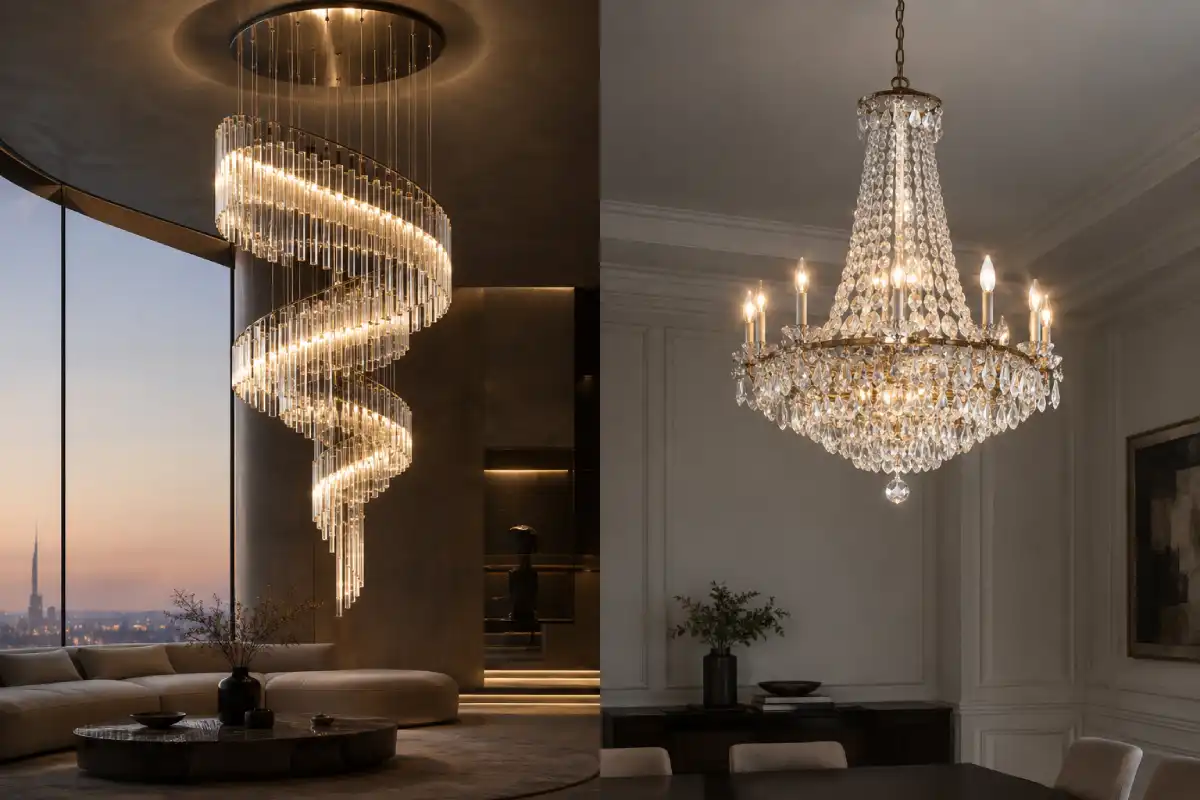
A ready-made chandelier is designed once and built many times. Factories settle on a size, a finish, and a tier count, then produce the same fixture for whichever room happens to buy it. The room adapts to the chandelier, not the other way around.
A custom piece reverses that. The room gets measured first: ceiling height, drop clearance, the sightline from a staircase or a mezzanine, whatever architectural detail already exists in the space. From there, the design gets built around those numbers instead of fitted to them afterward. Materials get chosen for that specific interior rather than picked from whatever finish happened to be in production that quarter.
The difference shows up most clearly at scale. A one-meter chandelier that’s slightly off in proportion is barely noticeable. On a three-meter piece, that same margin of error is impossible to miss.
Ready-Made Chandeliers: Pros and Limitations
Lower Upfront Cost and Faster Delivery
Ready-made pieces exist because most rooms don’t need anything more complicated. Standard ceiling heights, standard room sizes, and a catalog that already has a dozen options in the right diameter mean there’s no design phase, no structural review, and no waiting on a render. A piece already sitting in a warehouse can ship in a couple of weeks. Even one built to order from an existing mold usually turns around in a month or so.
The price reflects that. Manufacturing at volume spreads the tooling and material cost across hundreds of identical units, so a mid-size ready-made chandelier for a normal living room or dining space generally lands well below what a one-off piece would cost at the same size. For a room with a standard 2.7 to 3 meter ceiling, that’s often the more sensible way to spend the budget.
Limited Sizing, Materials, and Design Flexibility
The tradeoff is fit. Ready-made lines come in a handful of diameters and drop lengths, usually calibrated for ceilings under four meters. Push past that and the options thin out fast, sometimes to nothing. Finishes are whatever the manufacturer decided to offer that season, not what actually complements the stone or woodwork already in the room.
Structural planning is minimal too, because these pieces are built for a standard junction box carrying a light, manageable load. Anything heavier, anything spanning multiple tiers, anything meant to anchor into a dome or a coffered ceiling sits outside what these designs were engineered for. That’s less a flaw than a boundary. Ready-made chandeliers were never meant to solve for the unusual room.
Custom Chandeliers: Pros and Considerations
Tailored Size, Style, and Materials
A bespoke chandelier starts from the same questions Lorenzo Home asks on every large-scale project: the room’s dimensions, the ceiling type, what a visitor actually sees walking in. From there, size and drop length get set specifically for that space instead of pulled from a catalog range. A hotel atrium and a private dining hall might both call for a four-tier crystal piece, but the proportions, the finish, and the mounting solution end up nothing alike once the room’s actual geometry gets factored in.
Material choice opens up considerably too: crystal sourced for clarity and how it holds up under years of heat exposure, metal finishes matched against a specific stone or wood tone, a mixed design that balances weight against drama. None of that comes off a shelf, because none of it gets decided until the room does.
Longer Lead Times and Higher Investment
None of that customization happens quickly. A bespoke piece usually moves through a full bespoke chandelier design process: initial consultation, 3D rendering placed inside the actual room, a few rounds of revision, then manufacturing and hand-finishing before delivery and installation. From first sketch to final walkthrough, ten to sixteen weeks isn’t unusual for a large-scale piece, longer if structural engineering sign-off is required.
That timeline costs money in a way a catalog order doesn’t. Labor is a bigger share of the price than material, because a piece built once for one room needs the same design and engineering hours whether it’s a meter across or four. Clients paying for bespoke lighting are largely paying for that attention, not for materials that cost meaningfully more than what goes into a premium ready-made piece.
Cost Comparison: Ready-Made vs. Bespoke Chandeliers
Rough numbers help more than percentages here. A solid ready-made chandelier for a standard living room or entry usually runs from a few hundred dollars up to two or three thousand, depending on size and material. For that same size room, a bespoke piece starts above that range when there’s a genuine reason to go custom, then climbs based on tier count, crystal grade, and how much structural work the ceiling needs. Genuinely oversized pieces built for hotel lobbies or double-height residences move into five figures, sometimes six.
Design hours, structural engineering sign-off, hand assembly, and a supply chain built around single pieces instead of production runs account for most of that difference. Ready-made pricing buys a product built once and sold many times. Bespoke pricing buys a solution engineered for one room, and the labor behind it shows up in the invoice more than the materials do.
When a Ready-Made Chandelier Makes Sense
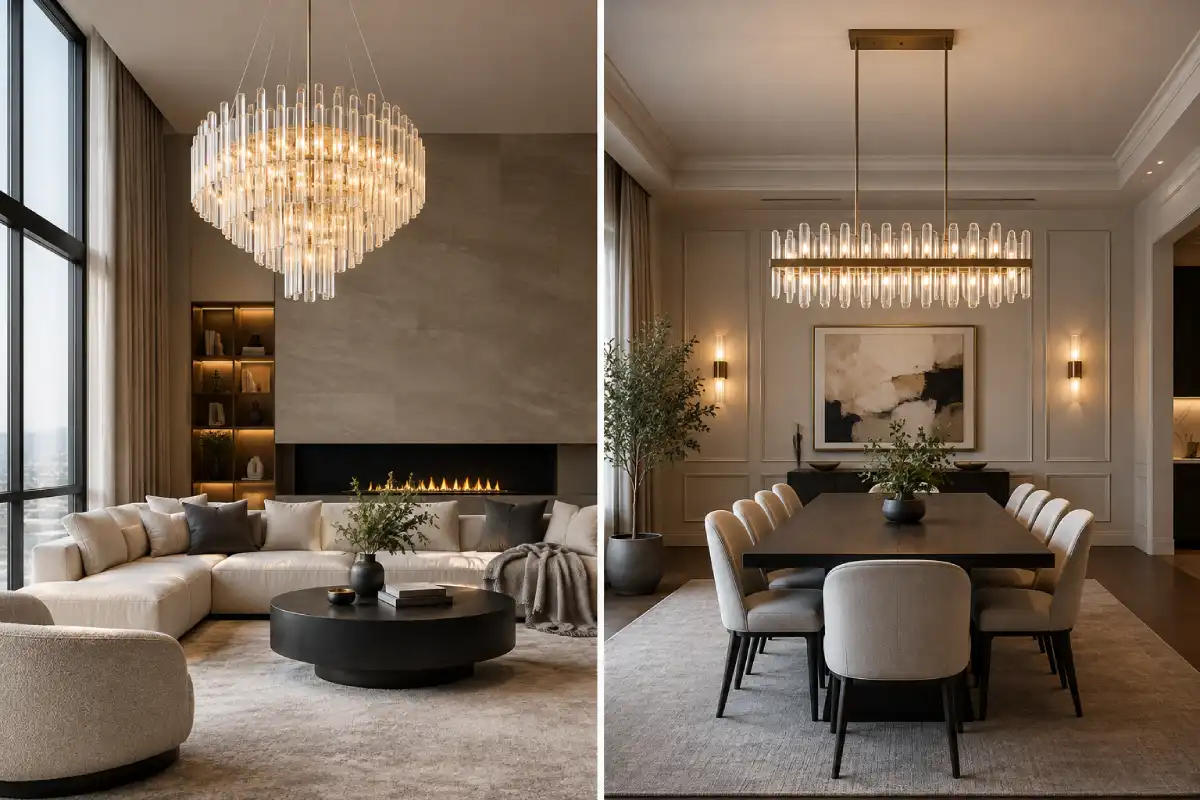
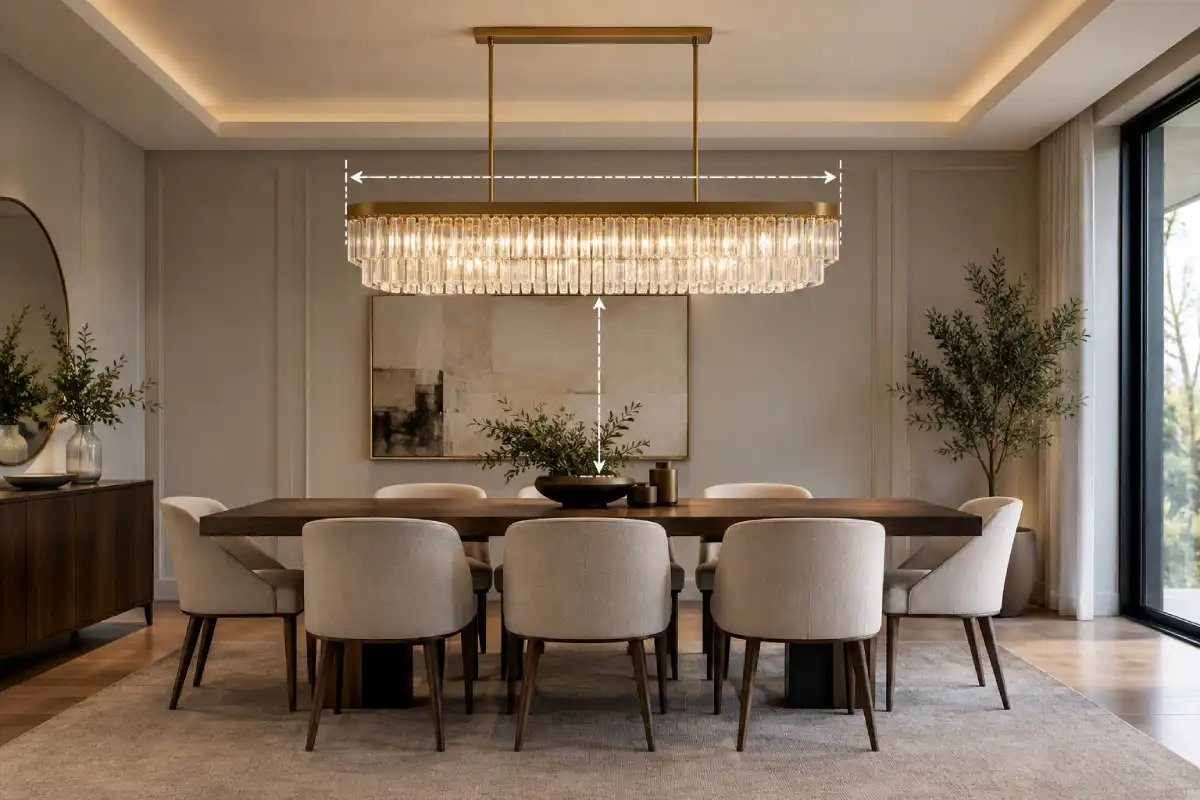
A ready-made chandelier is the right call more often than the custom lighting industry likes to admit. Standard ceiling heights under four meters, secondary rooms like a guest bedroom or a powder room, rental properties where the fixture needs to be functional rather than a statement, and projects on a tight timeline or a tight budget are all situations where a catalog piece does the job without anyone losing sleep over it.
It also makes sense in rooms that aren’t the design focal point, somewhere like a hallway, a home office, or a secondary dining room. Those spaces need good lighting more than they need a piece built to be looked at from across a lobby.
When Bespoke Lighting Is the Better Investment
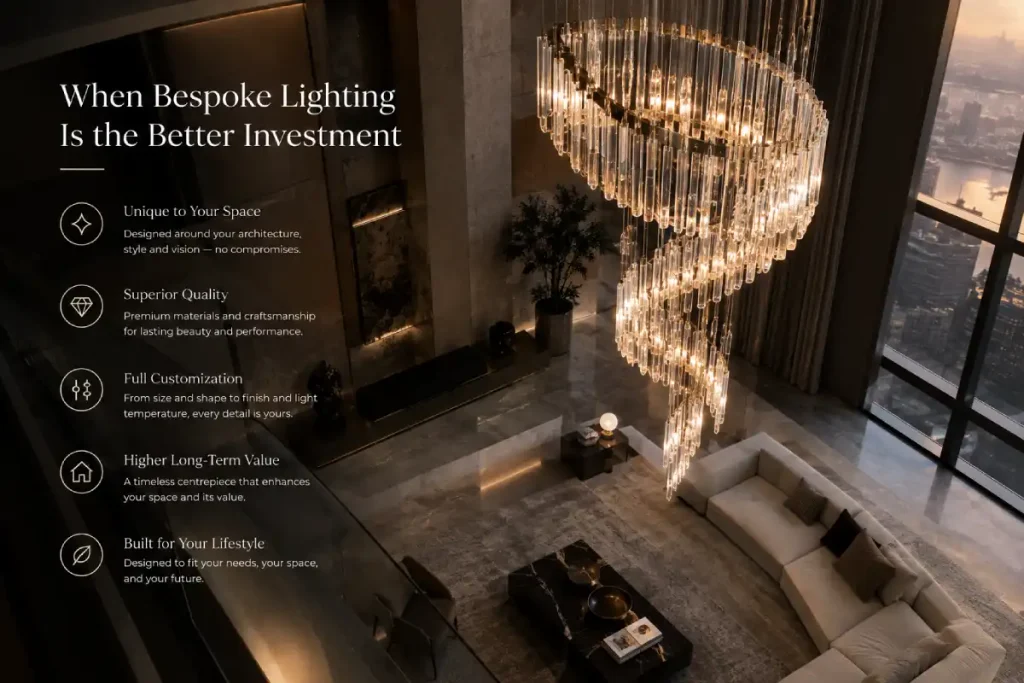
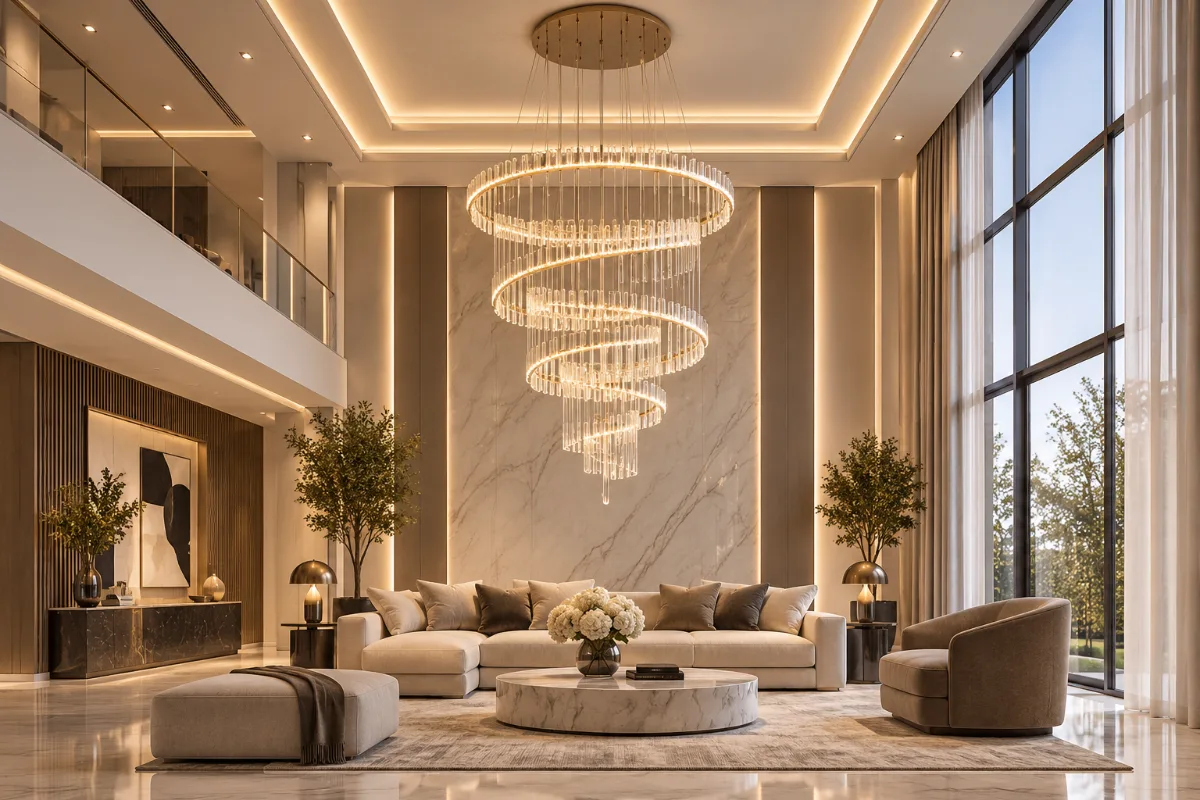
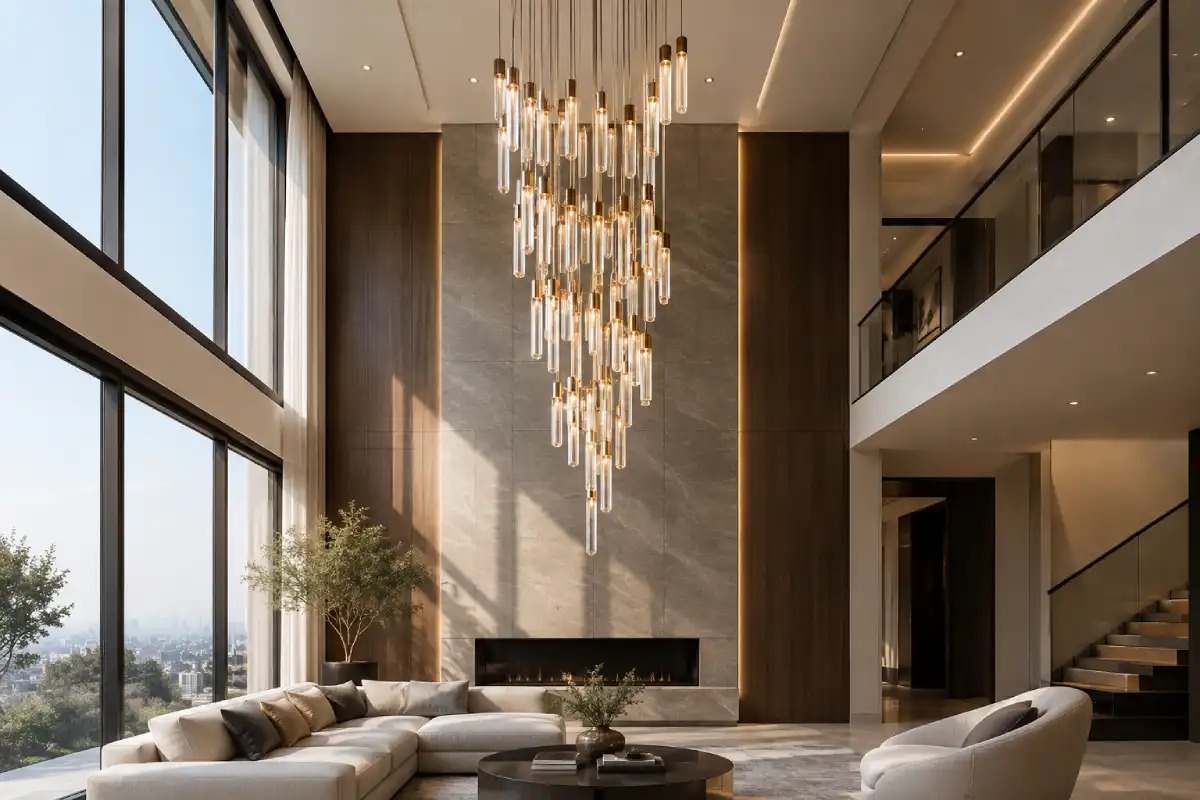
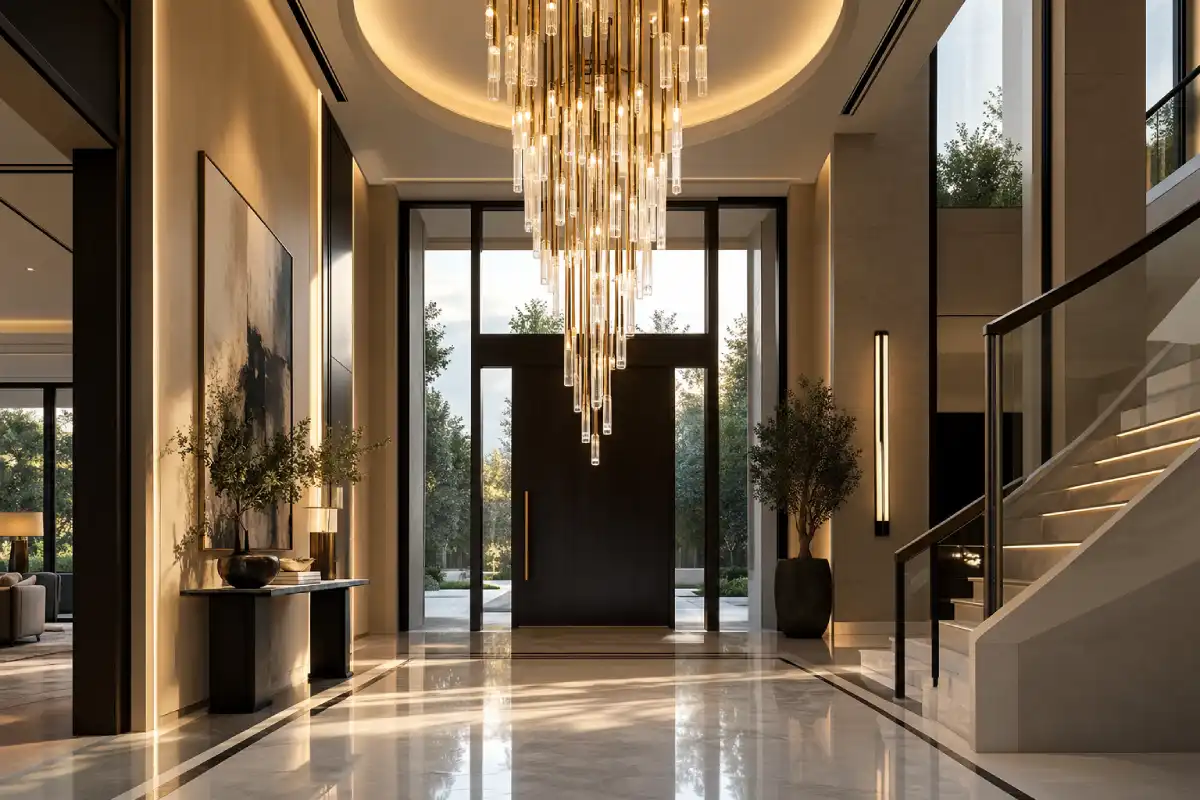
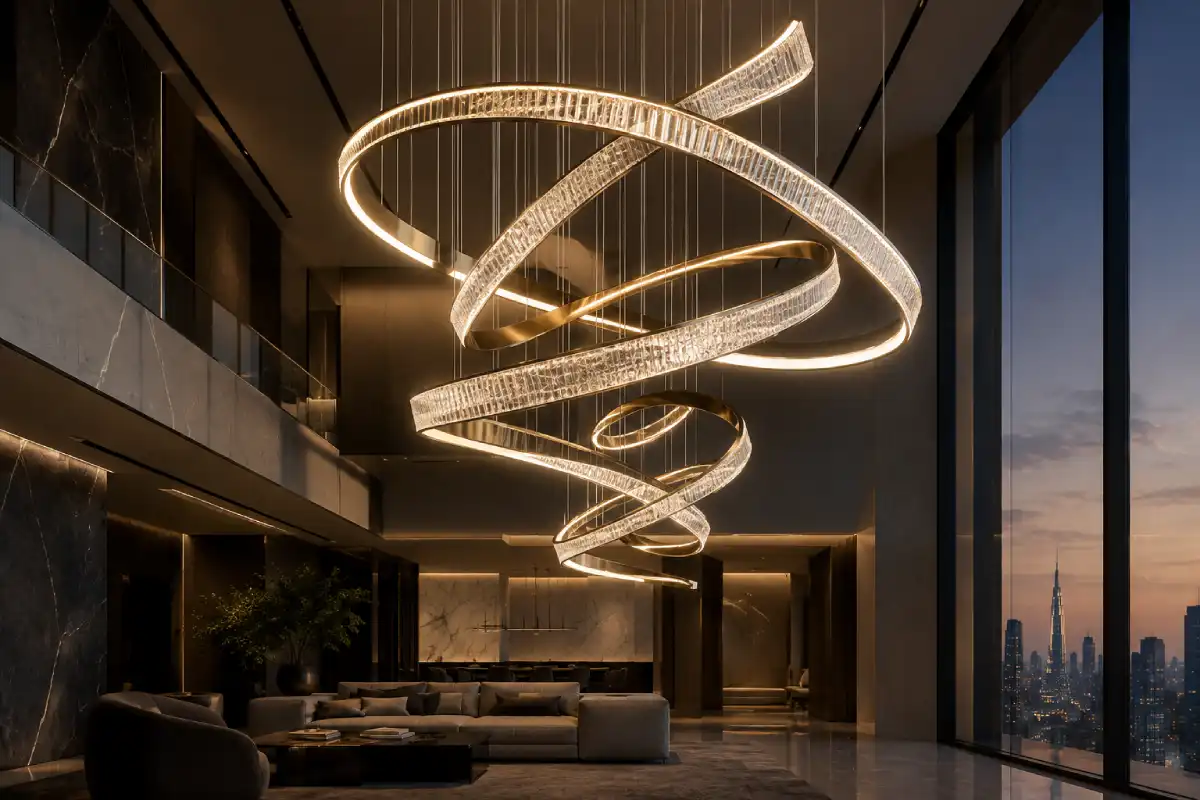
The case for custom gets stronger as the ceiling gets higher and the room gets more architecturally serious, somewhere like a double-height entry, a hotel atrium, or a staircase curving through two floors of a private residence. A ready-made piece sized for a normal room reads as an afterthought in that kind of space, no matter how well it’s made.
It’s also the better call whenever the ceiling itself is unusual: a dome, a coffered ceiling, a skylight that changes how light crosses the room through the day. Those need a mounting solution worked out alongside the design, not a standard junction box and a stock chandelier bolted into whatever’s up there.
There’s a commercial argument too. A hotel lobby or a ballroom chandelier isn’t just lighting, it’s part of how the space gets remembered and photographed. For a business where that impression matters, the piece earns its cost back in a way a private residence’s chandelier doesn’t have to.
How to Choose Between a Custom and Ready-Made Chandelier
The decision usually comes down to three practical questions more than personal taste: what the ceiling actually allows, what the room needs the piece to do, and how much of the budget makes sense to put into one fixture. A room with a standard ceiling and no particular architectural ambition rarely needs bespoke lighting, no matter how much someone might want a showpiece. Grand entries, atriums, and rooms built specifically to impress usually need more than a catalog can offer, regardless of budget.
The real test is scale and structure, not preference. If a fixture needs to span more than about two meters, hang from anything other than a standard junction box, or read correctly from ten meters below a domed ceiling, ready-made options stop being realistic somewhere in that range.
For anyone weighing the two on an actual project, Lorenzo Home’s bespoke chandelier design service starts with a walkthrough of the room before any decision gets made, measuring the ceiling, checking what the structure can support, and giving a straight answer about whether custom is worth it for that specific space. Sometimes it isn’t, and that’s a fine outcome too. The Dubai showroom is open for anyone who wants to see the difference between a catalog piece and a bespoke one in person before committing either way.
Custom vs. Ready-Made Chandeliers: Frequently Asked Questions
Is a custom chandelier worth the extra cost?
It depends on the room. In a space with a standard ceiling under about four meters, a well-made ready-made chandelier usually does the job. A custom chandelier earns its cost in double-height entries, atriums, staircases, and rooms with domed or coffered ceilings, where catalog sizes run out and the mounting has to be planned with the design.
How long does a bespoke chandelier take to make?
For a large-scale piece, ten to sixteen weeks from first consultation to installation is typical. That covers design and 3D visualization, revisions, manufacturing, hand-finishing, and delivery. Projects that need structural engineering sign-off can take longer.
Can a ready-made chandelier work in a high ceiling?
Sometimes, but options thin out quickly above four meters. Most catalog ranges are sized and engineered for standard ceilings and a standard junction box, so a fixture that needs to span more than about two meters or carry a heavier multi-tier load usually has to be custom-made.
What makes a bespoke chandelier more expensive?
Mostly labor rather than materials: design hours, structural planning, hand assembly, and a supply chain built for a single piece instead of a production run. Scale, tier count, crystal grade, and how much work the ceiling needs move the price from there.