Bespoke Chandelier Process in Dubai: From First Brief to Final Installation
Most clients commissioning a bespoke chandelier for the first time know exactly what they want the finished piece to look like, and very little about what happens between the first conversation and the day the installation crew arrives. That gap causes more back-and-forth than it should, mostly because nobody lays out the sequence at the start.
In Dubai, the design work is only part of the schedule. International sourcing, customs clearance, and the construction programme of a villa, penthouse or hotel all add their own timing pressure. This guide walks through each stage of a bespoke chandelier project as it typically runs in the UAE, what you need to have ready, and what actually moves cost and lead time.
In short: a bespoke chandelier project in Dubai usually runs through five stages: brief, 3D design, sampling and shop drawings, manufacturing, then shipping and installation. Most large pieces take roughly 15 to 25 weeks from the first conversation to the final lit walkthrough.
The Bespoke Chandelier Process at a Glance
- Consultation and design brief: room data, style, budget range and deadline.
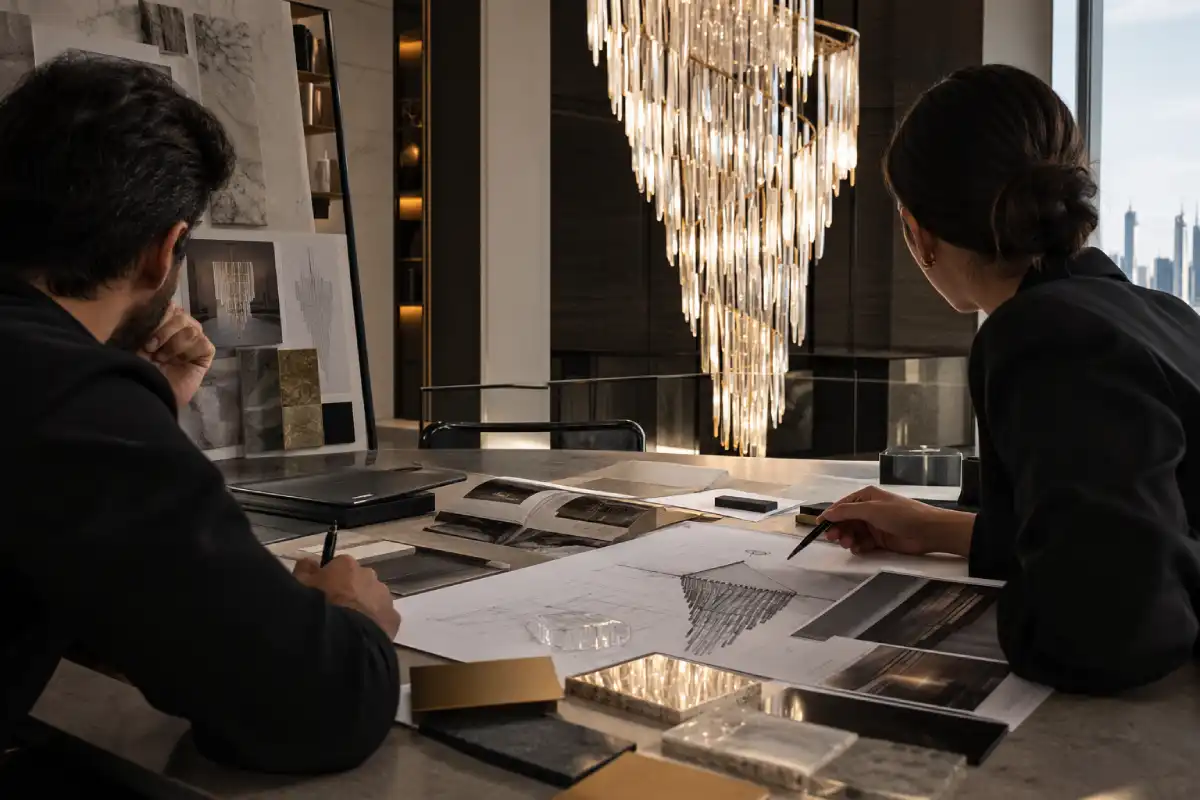
- Concept design and 3D visualisation: a scaled model placed in a digital version of your room.
- Material sampling and shop drawing approval: physical samples, then final technical drawings signed off.
- Manufacturing and quality checks: frame, crystal and assembly, checked at every stage.
- Shipping, customs and installation: crating, clearance into Dubai, mounting, assembly and a lit walkthrough.
Step 1: Initial Consultation and Design Brief
The first meeting is mostly information gathering, not design: room dimensions, ceiling height, the style already in place or planned, a budget range, and the date everything needs to be finished by. For a villa or hotel still under construction, this conversation usually happens through the contractor or design team rather than in a finished room. Structural drawings and ceiling specifications are requested at this stage instead of being measured on site.
Budget and timeframe matter more here than they seem to. An honest range at the start decides which crystal grade, tier count and finish options make sense to propose. Designing first and cutting back later, once a quote lands higher than expected, costs everyone time.
What to have ready for the first meeting
- Floor dimensions and finished ceiling height, or the reflected ceiling plan if the room is not built yet
- Structural drawings, or at least the slab or ceiling type above the chandelier position
- Photos, renders or a mood board of the interior, including floor and wall materials
- The target completion or handover date
- A realistic budget range
- Contact details for the interior designer, main contractor and MEP engineer, if there are any
Who is usually involved
On a private villa, the owner and interior designer often lead. On hotel, commercial and larger residential projects, the architect or interior designer specifies the piece, while the main contractor and MEP engineer handle ceiling reinforcement, power and access. Bringing them in early avoids redesigns later; our guide on how architects and interior designers specify a bespoke chandelier covers that side in detail.
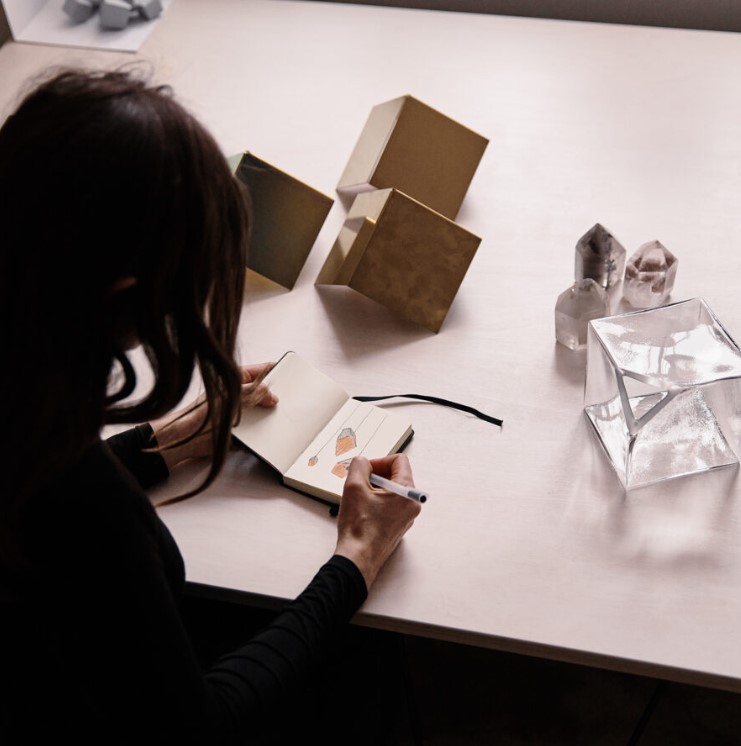
Step 2: Concept Design and 3D Visualisation
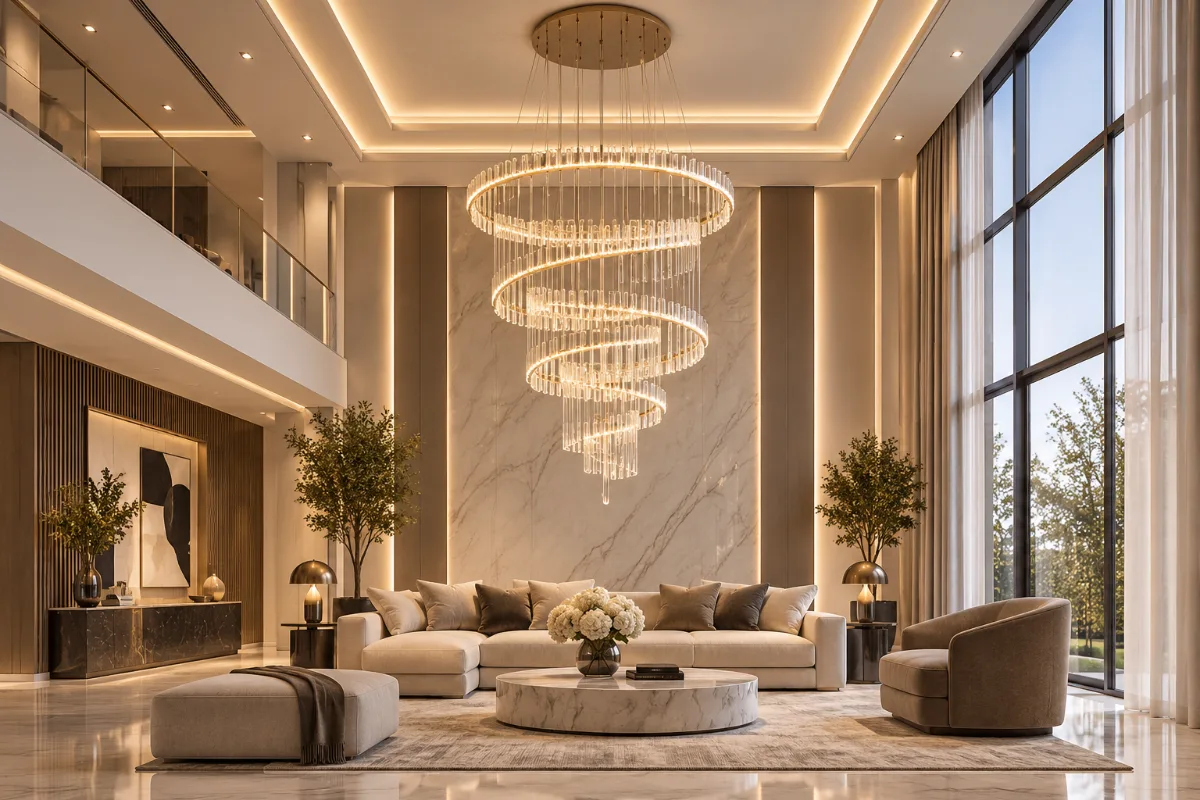
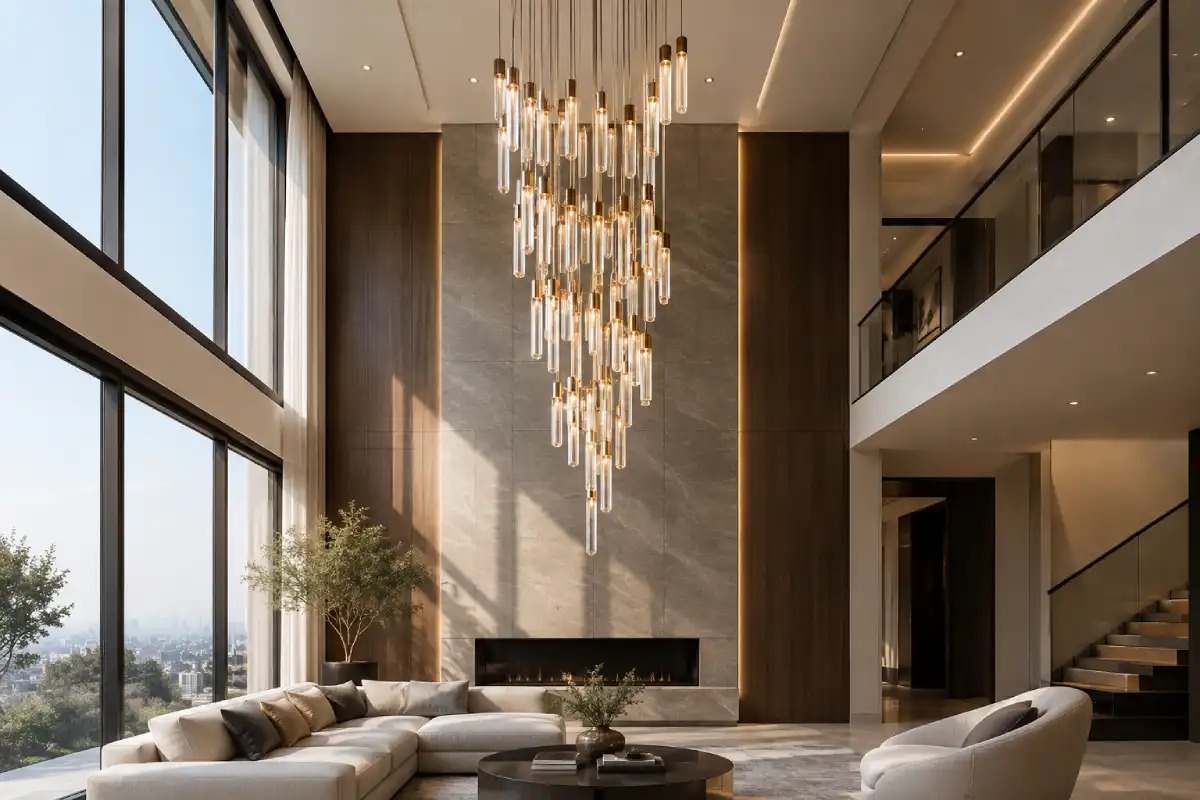
Design work starts once the brief is confirmed. The chandelier is built as a scaled 3D model and placed inside a digital version of the actual room, not shown against a blank background. That distinction matters: a design that looks well proportioned on its own often reads differently at the real ceiling height and sightlines, especially when designing for a double-height space. This is usually where tier count or diameter gets adjusted for the first time.
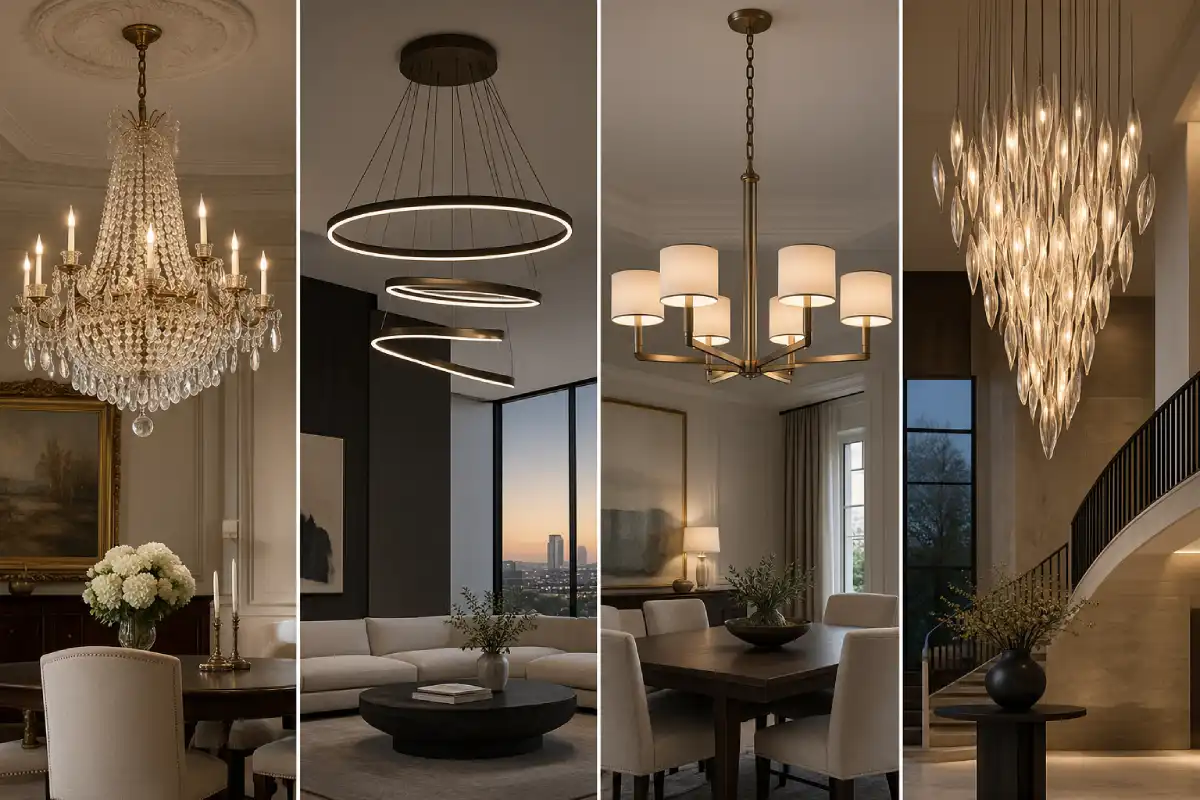
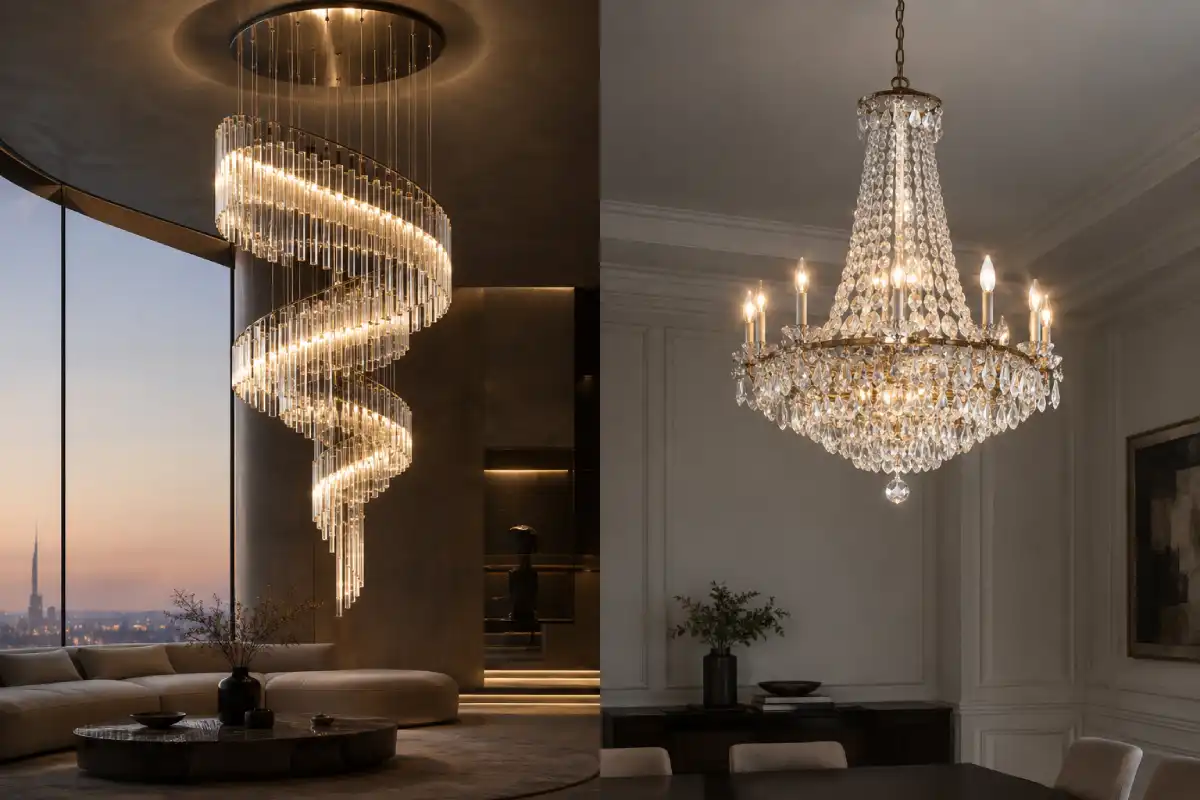
A few rounds of revision generally follow, checking the render from the angles people will actually see it from, such as the entrance, the staircase or the upper landing, not just straight on. Materials and finishes are roughed in at this stage, along with the overall direction, whether that is a classic, modern, transitional or statement style. Nothing is final until physical samples are checked in the next step.
Step 3: Material Sampling and Shop Drawing Approval
Material decisions are locked in through physical samples, not photos or spec sheets. Crystal cut and clarity, metal finish, and how a plated or powder-coated surface looks under the room’s own light are all checked in person before manufacturing starts. A finish that reads correctly on screen can look very different next to the marble, wood or stone already installed.
For crystal sourced from outside the UAE, which covers most large custom work, sample shipping adds real time to this step. Building that into the schedule from day one is far easier than treating it as a surprise delay later.
Once samples are approved, the design is turned into shop drawings: final dimensions, overall weight, suspension and fixing details, the ceiling plate, and the electrical load. These drawings are signed off by the client and, on larger projects, by the consultant or structural engineer. Production starts only after that sign-off, because changing a dimension once the frame is being built is slow and expensive.
Step 4: Manufacturing Timeline and Quality Checks
Manufacturing is where most of the project’s time is spent, and it happens in stages rather than all at once. The frame is built and finished first, then crystal elements are cut and prepared, then everything is assembled by hand, tier by tier, with alignment and proportion checked as it comes together.
Quality checks happen at each stage instead of as one final inspection. A finish issue or a misaligned tier is caught while it is still cheap to correct, not after the piece is fully assembled and crated. For anything heavy enough to need structural engineering review of the ceiling, that review runs in parallel with manufacturing, so the mounting plan is ready by the time the chandelier is.
Step 5: Shipping, Installation and On-Site Setup in Dubai
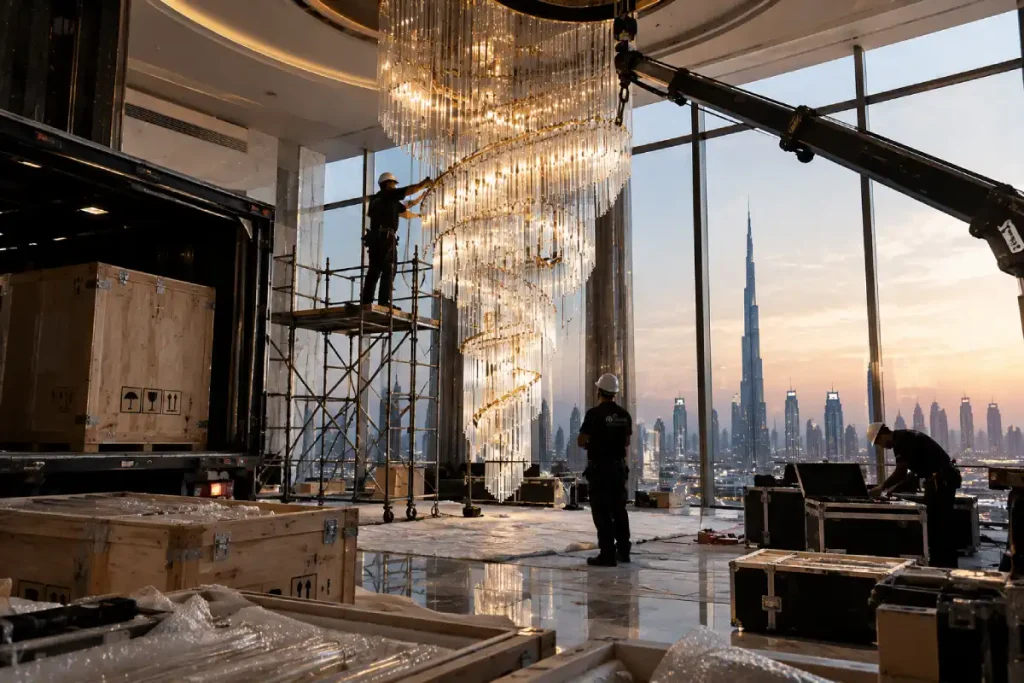
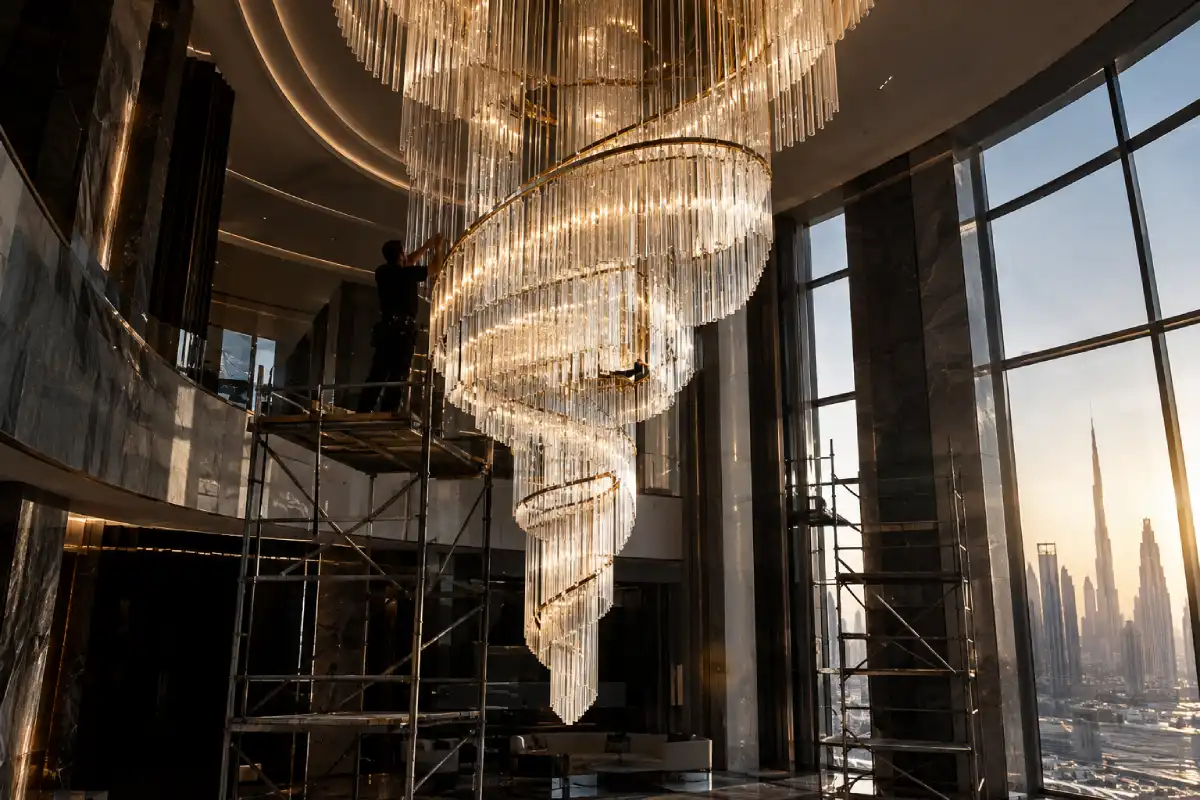
A finished piece this size does not travel like a normal shipment. Packing is built around the geometry of that specific chandelier, with tiers and crystal sections often crated separately and reassembled on site. Customs clearance into Dubai is planned in advance, not treated as a formality once the crate lands.
Installation is a coordinated job, not a delivery. Structural mounting goes in first, checked against the engineering plan agreed months earlier, then the electrical connection, then the chandelier is assembled in place tier by tier. Scheduling this around a villa’s finishing trades or a hotel’s opening date takes coordination on both sides. Dubai’s summer heat can also limit when scaffolding or lift work happens on an active site.
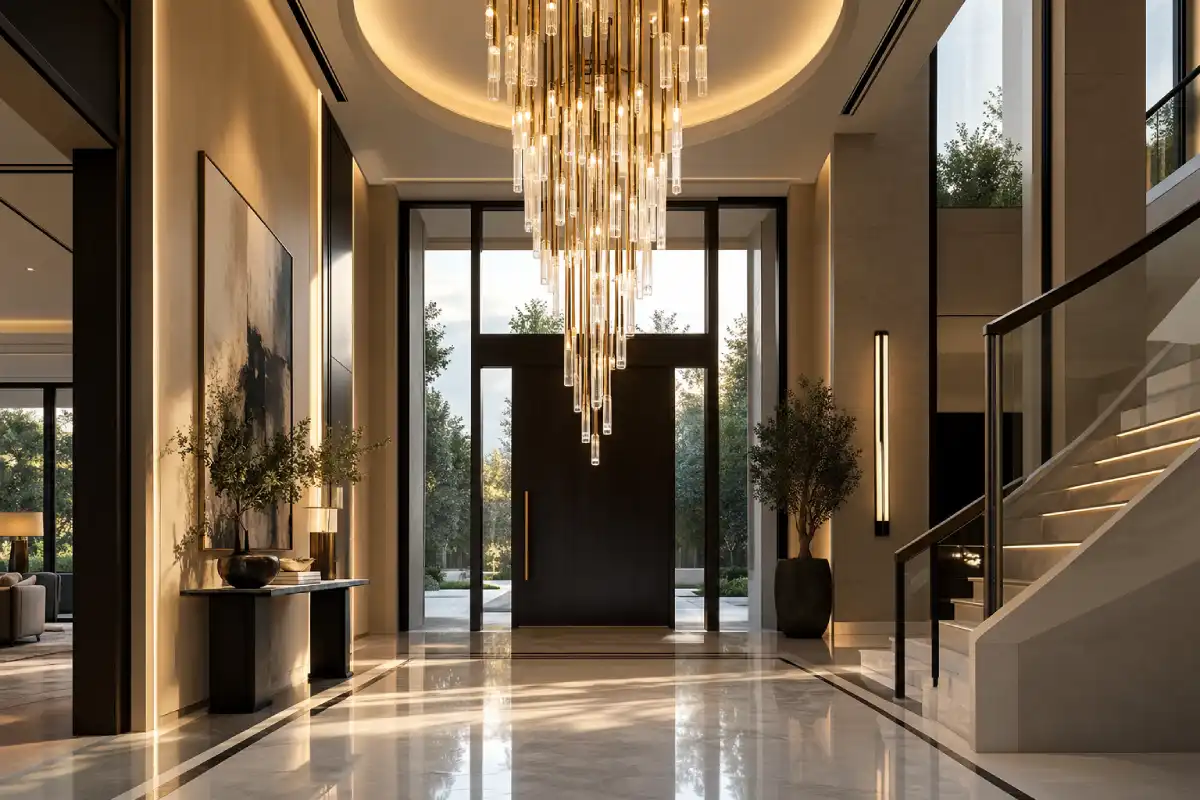
A lit walkthrough closes the job, checking the finished chandelier against the render it started as. In a double-height entrance, that final check from the door and the stairs matters most, as covered in our guide to foyer and entryway chandeliers.
Typical Timeline for a Bespoke Chandelier Project
Total time varies with size and complexity, but most bespoke projects in Dubai follow a similar shape from first conversation to final walkthrough.
| Stage | Typical duration |
|---|---|
| Consultation and design brief | 1 to 2 weeks |
| Concept design and 3D visualisation | 2 to 4 weeks, including revisions |
| Material sampling and shop drawing approval | 2 to 3 weeks, longer if crystal ships from overseas |
| Manufacturing and quality checks | 8 to 12 weeks |
| Shipping, customs and installation | 2 to 4 weeks |
| Total, first conversation to final walkthrough | Roughly 15 to 25 weeks for most large-scale pieces |
Structural engineering review, holiday-season shipping delays, or more revision rounds than usual can push that range further out. None of these stages compress well under a tight deadline, which is why an accurate first estimate matters more than an optimistic one. On a building still under construction, the best time to start is before the ceiling is closed, so blocking and power can be built in rather than retrofitted.
Planning a project with a fixed handover date? Share your drawings or room details and the Lorenzo team will map a realistic schedule back from that date.
What Influences Cost and Lead Time in Dubai
No two bespoke pieces are priced the same, because the cost follows the decisions made for a specific room. If you are still weighing options, our comparison of a custom vs. ready-made chandelier sets out where each makes sense. These are the factors that move cost and schedule most.
Crystal grade and materials
Crystal grade is the biggest lever on price. Full lead crystal costs more than crystal glass to begin with, and sourcing it internationally adds freight and customs costs that a locally stocked catalogue piece never carries. Metal choice and finish, such as brass, plated or powder-coated surfaces, add their own range.
Size, tiers and weight
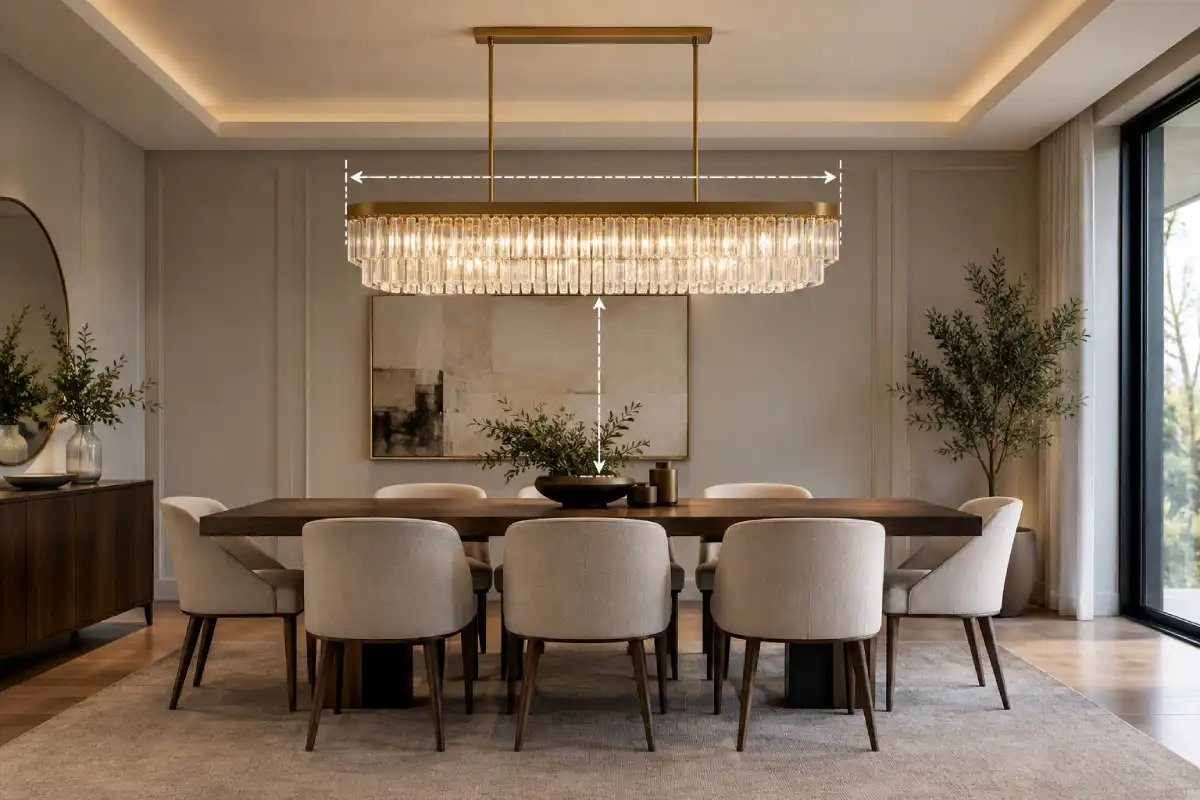
Size and tier count multiply from there. A larger piece needs proportionally more crystal, more structural engineering and more assembly hours; it is not simply a bigger version of the same design. Weight also decides what the ceiling has to carry.
Ceiling type and structure
Ceiling type affects both cost and schedule more than most clients expect. A reinforced concrete slab with clear access above it is the easiest case. A decorative dome or a finished ceiling with no access point usually means opening the ceiling to install blocking or a support plate before the chandelier arrives, scheduled around whichever trade already has access to that area.
Site access in Dubai
A villa with ground-level access is straightforward. A hotel lobby or high-rise penthouse changes the picture: installation often works around operating hours, security clearance, and the building’s own contractor rules for bringing equipment in. All of these affect how long installation takes once the piece is on site.
None of these variables are fixed until a specific room enters the conversation. That is why an accurate quote from Lorenzo always follows a real look at the space rather than a general price list.
Frequently Asked Questions
How long does a bespoke chandelier take in Dubai?
Most large bespoke chandeliers take roughly 15 to 25 weeks from the first consultation to the final walkthrough. Manufacturing alone usually takes 8 to 12 weeks, and overseas crystal sourcing or structural review can extend the total.
Can the timeline be shortened?
Some stages can overlap, such as ceiling preparation running alongside manufacturing. Sampling, production and quality checks do not compress well, so the most effective way to save time is to start early, ideally while the building is still at structure or design stage.
At what stage of construction should we start?
Before the ceiling is closed. That allows structural blocking, the ceiling plate and the power supply to be built into the ceiling instead of opening a finished ceiling later.
How much does a bespoke chandelier cost?
Cost depends on crystal grade, size and tier count, ceiling structure, and site access. Lorenzo gives a quote after reviewing the actual space.
Start Your Bespoke Chandelier Project
A first conversation is the fastest way to find out which parts of this timeline apply to your project. Send your room dimensions, drawings or a few photos, and the Lorenzo team will come back with an initial direction and a realistic schedule. You can also message us on WhatsApp or explore our bespoke design service.