How to Choose a Bespoke Chandelier Design Partner in Dubai
A chandelier commission is one of the few home or hospitality purchases where a bad decision is genuinely hard to undo. Once the ceiling’s been opened, the mount installed, and the piece hung, walking it back means paying someone to undo the first company’s work before starting over. That’s a different level of risk than picking the wrong sofa, and it’s worth treating the choice of who designs and builds the piece with the same seriousness as the piece itself.
Why the Right Design Partner Matters for a Custom Chandelier
A chandelier this size sits at the intersection of design, structural engineering, and manufacturing, and most studios are genuinely strong at only one or two of those three things. Design-led studios sometimes produce a beautiful render with no real plan for how the piece gets mounted safely. Manufacturing-focused shops can build a technically sound piece that looks like a stock item dressed up. The partner actually worth commissioning needs to be credible across all three, because a weakness in any one of them shows up in the finished room.
The stakes rise with the size of the piece. Replacing a small pendant that’s slightly off doesn’t cost much. A four-meter chandelier engineered for the wrong load, or sized wrong for the room, is an expensive mistake to walk back once it’s already hanging.
What to Look for in a Bespoke Chandelier Studio
Three things separate a studio that can actually deliver a large custom piece from one that mostly wants the commission: a real body of finished work, capability that lives in-house rather than farmed out piecemeal, and sourcing standards that hold up under a direct question.
Portfolio and Past Projects in Dubai and the UAE

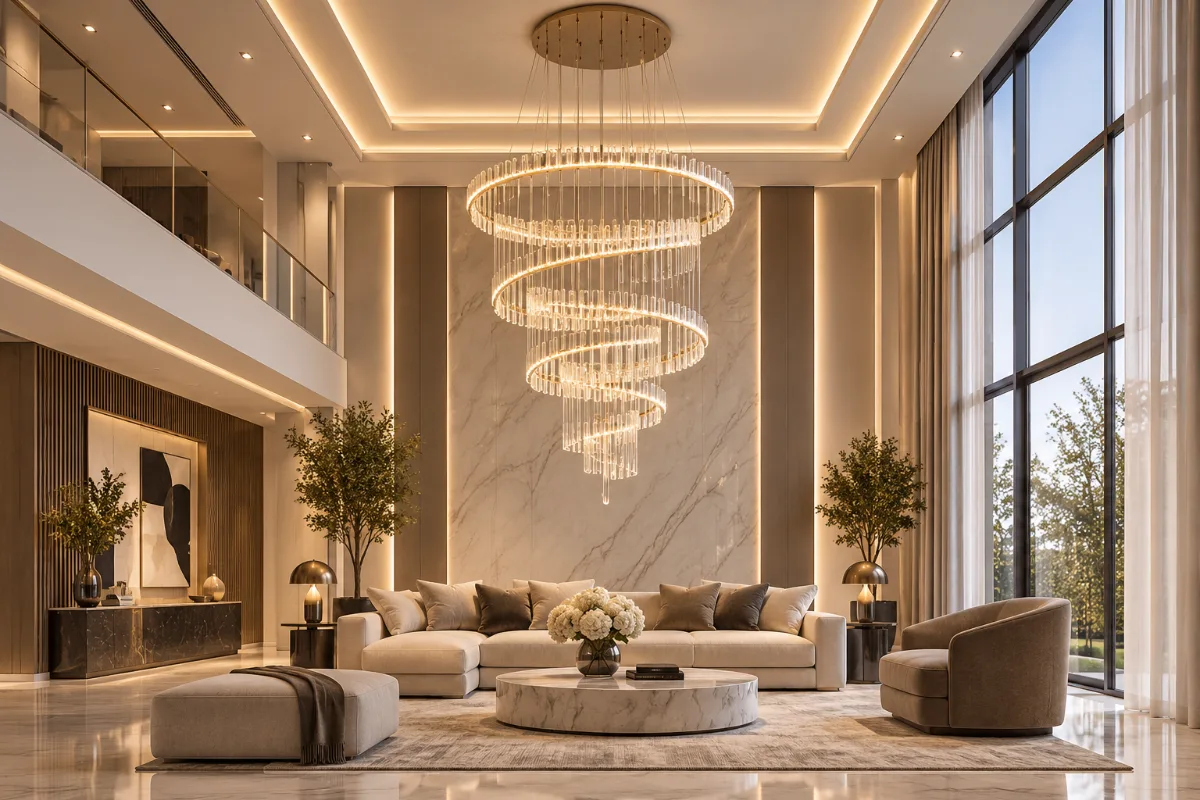
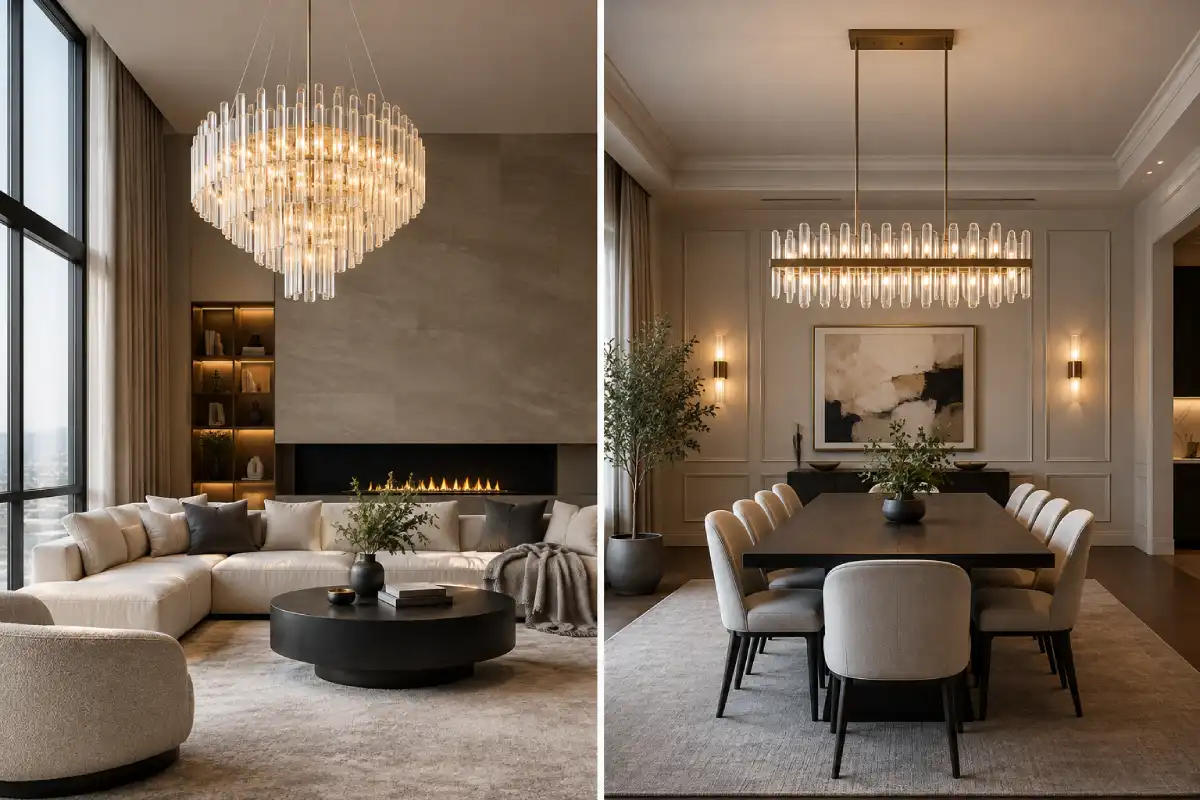
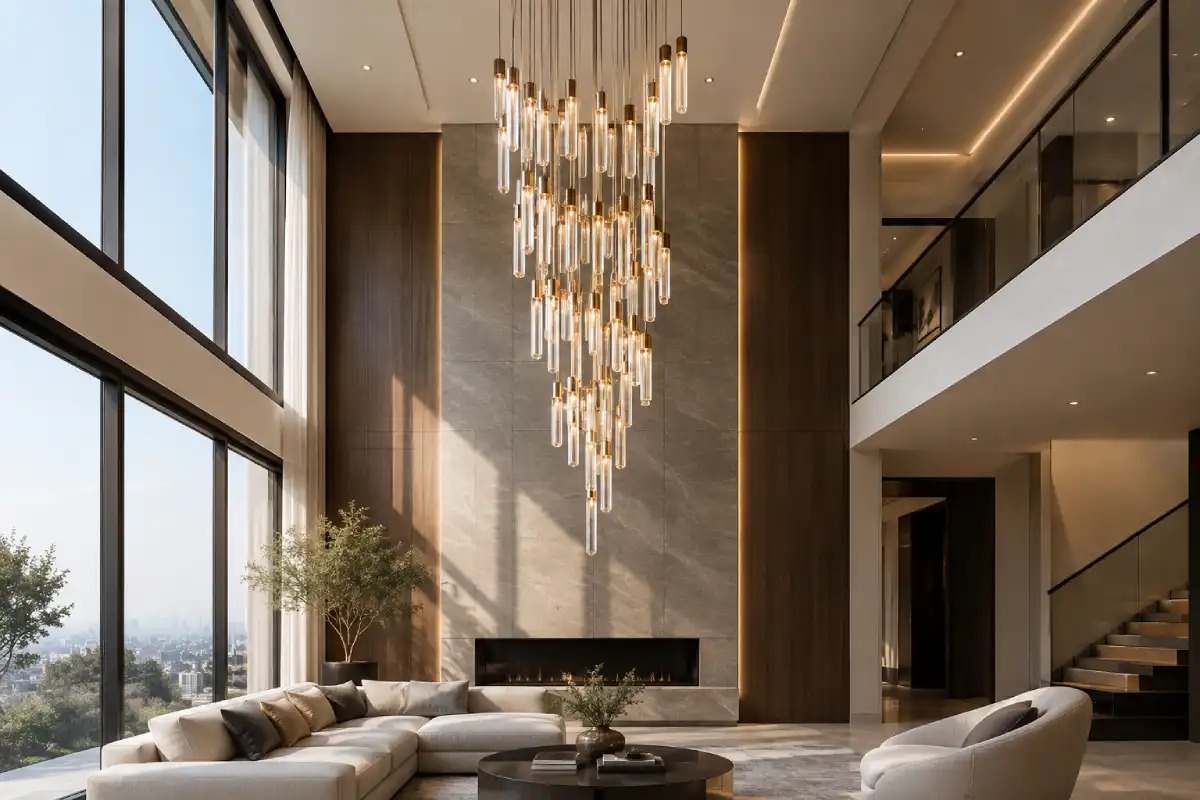
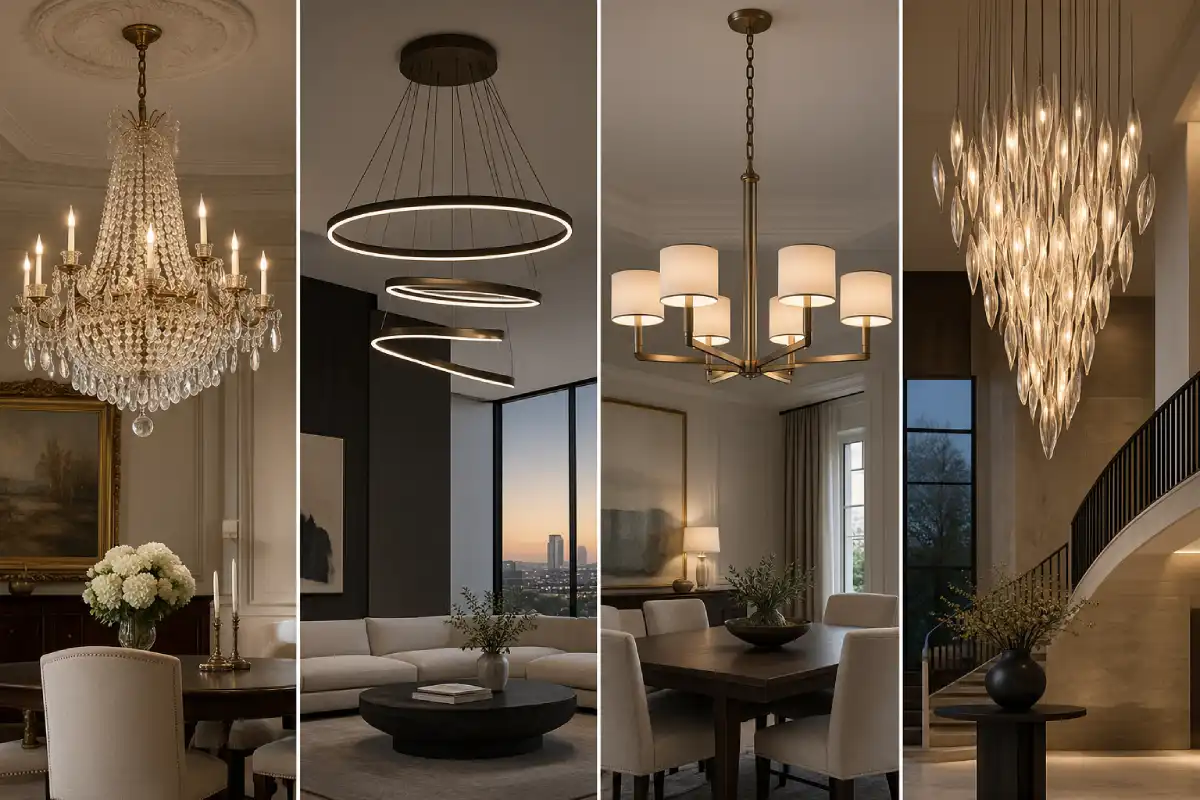
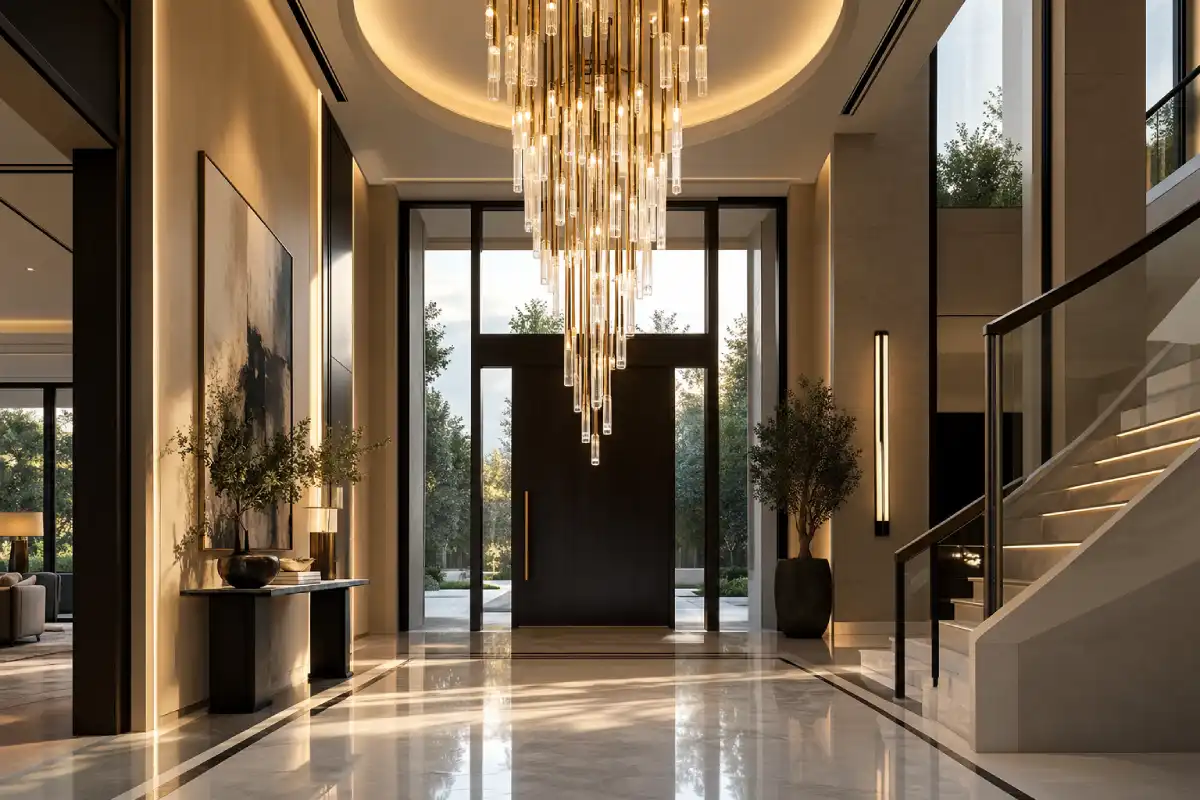
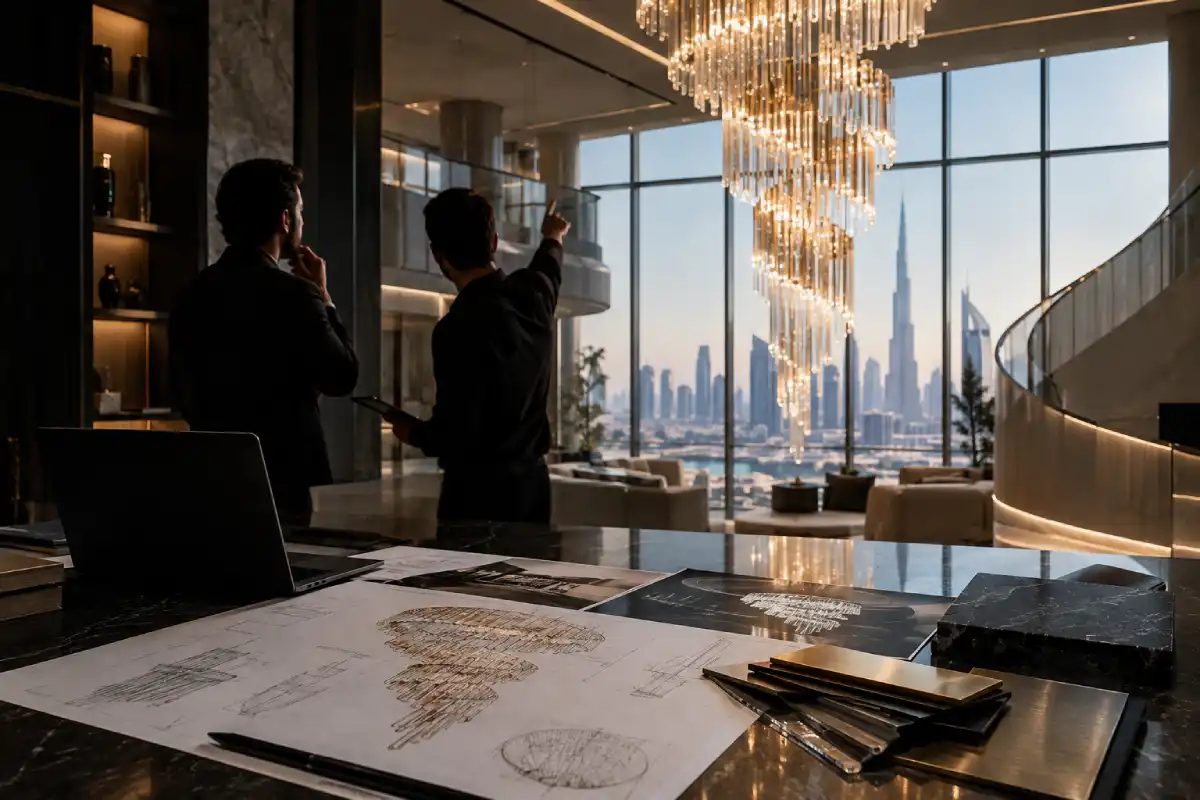
Renders are easy to produce and don’t prove much about whether a studio can actually deliver. What matters is photographed, installed work, ideally in spaces comparable to the one being planned: a similar ceiling height, a similar scale, a similar setting like a villa entry or a hotel lobby rather than a boutique retail display.
UAE-specific experience carries real weight here too. A studio that has already worked through Dubai’s import and customs process for crystal and metal components, scheduled installation around an active villa build, or handled a hotel’s access restrictions has already solved problems that a studio new to the market will hit for the first time on a client’s project.
In-House Design and Manufacturing Capabilities
Some studios design in-house and manufacture through a separate factory relationship, which isn’t automatically a problem but does add a layer between the client and the people actually building the piece. Asking directly where the crystal gets cut, where the frame gets fabricated, and who handles installation is a reasonable question, and a studio confident in its own process usually answers it without hesitation.
Continuity matters more than it might seem. A studio where the same team manages design, sourcing, and installation can catch a mismatch between the render and the physical piece before it becomes a problem on site. Split that across multiple vendors and the risk shifts onto whoever’s coordinating them, which is usually the client.
Material Sourcing and Quality Standards
Crystal grade should be something a studio states clearly and specifically, not a word like premium used without a number or a standard behind it. Asking what grade of crystal is being used, where it’s sourced, and whether a physical sample is available before manufacturing begins is a fair question for any studio claiming bespoke work, and the answer says a lot about how seriously that studio takes the material side of the job.
The same goes for finishes and metalwork. A studio should be able to explain what a plated finish is actually plated with, how it’s expected to hold up over years of daily light exposure, and why it was chosen for a specific application, rather than describing everything as durable and moving on.
Questions to Ask Before Commissioning a Custom Chandelier
A short list of direct questions, asked early, does more to separate a serious studio from an ambitious one than any portfolio review.
- What grade of crystal are you using, and can I see a physical sample before production starts?
- Who signs off on the structural mounting, and is that handled in-house or by an outside engineer?
- Can I see photographed installations at a comparable scale, not just renders?
- What happens if the piece doesn’t fit once it’s on site, and who is responsible for that cost?
- What is the payment schedule, and what is covered if the timeline slips?
A studio that answers all five without hesitation is worth taking seriously. One that gets vague on two or three of them is worth a second look before signing anything.
Red Flags to Watch Out For
A studio that can’t produce a single photograph of an installed piece at comparable scale, only renders and stock imagery, is the clearest warning sign there is. Renders show intent. Photographs show capability.
Vagueness around structural engineering is another one. A studio unwilling to say clearly who signs off on the mounting plan for a heavy piece, or one that treats the question as unnecessary for a project the client is already excited about, is treating a safety issue as a sales obstacle. The same goes for pressure to commit before samples are approved or a firm timeline is in writing: a studio confident in its own process doesn’t need to rush a client past the steps that protect them.
Price is worth a second look too, though not in the direction most people expect. A quote dramatically below what comparable studios charge for a similar scope usually means something is being cut, most often crystal grade, structural engineering, or the hand labor actually going into the piece, rather than genuine efficiency.
Why Lorenzo Is a Trusted Bespoke Chandelier Partner in Dubai
Lorenzo Home fits the criteria above because its bespoke chandelier studio in Dubai was built around them, not adjusted to match them afterward. Design, structural engineering coordination, and manufacturing stay with the same team from first consultation to final walkthrough, which is the continuity point raised earlier: the people who designed a piece are the same people accountable for how it performs once it’s hanging.
Crystal grade gets specified and sourced for each project rather than described in vague terms, with samples checked against the room before anything goes into production. Every large-scale piece gets its structural mounting engineered and signed off before installation, a step that doesn’t get skipped even when a client is in a hurry to see the piece go up. And the portfolio is Dubai and UAE work specifically: villa entries, hotel lobbies, and ballrooms built for this region’s ceilings, climate, and construction realities, not adapted from a catalog designed somewhere else.
For anyone weighing a commission against the questions and red flags above, Lorenzo Home will answer all of them directly, starting with an honest look at the room itself before any number gets discussed. The Dubai showroom keeps finished pieces and raw materials on display, so a client can judge the craftsmanship firsthand instead of taking a portfolio’s word for it.