Custom Crystal Chandelier: Bespoke vs. Off-the-Shelf Designs
Search “custom crystal chandelier” and most of what comes up is a chandelier available in three sizes and four finishes, with “custom” meaning you get to pick one from that list. A genuinely bespoke chandelier works differently: it’s engineered around one specific room, not selected from options someone else already finalized. The difference between those two things, real bespoke design against a customizable catalog item, shows up in the crystal itself as much as anywhere else in the piece.
What Makes a Chandelier “Custom Crystal”
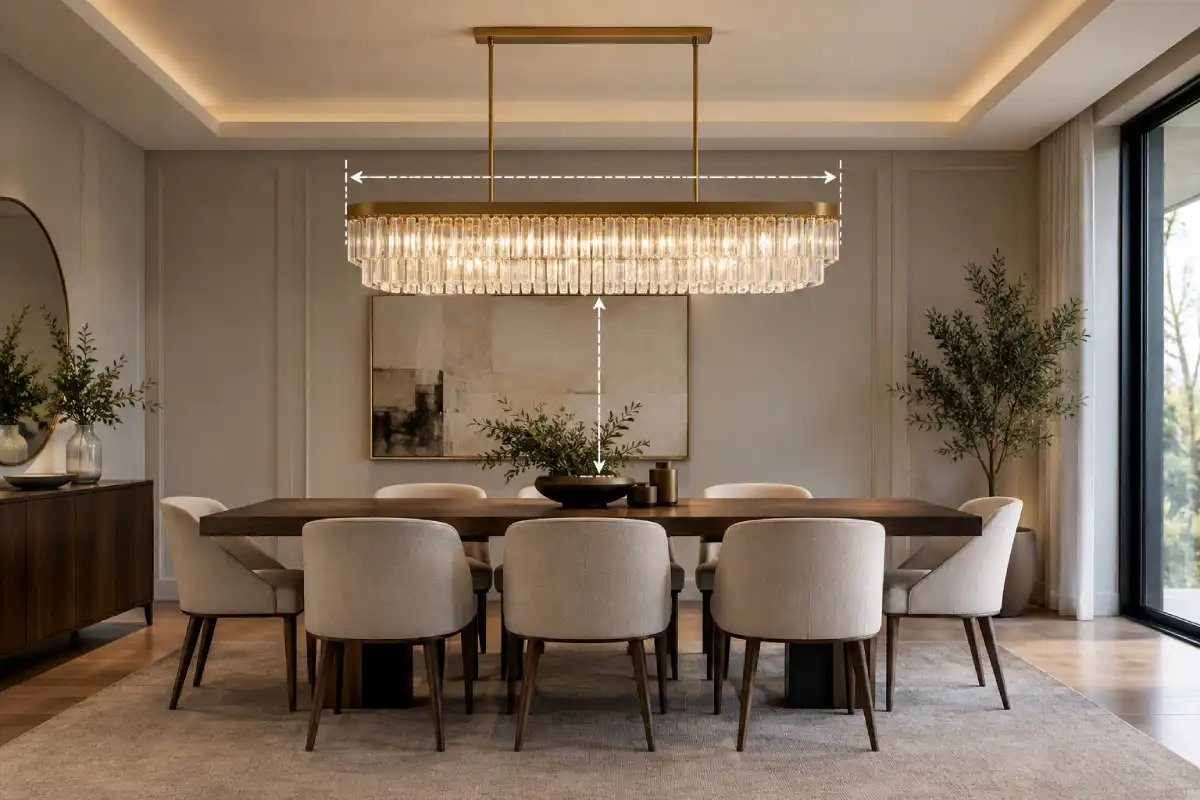
Three things separate a genuinely custom piece from a customizable one. Size and drop length get set for that specific room’s ceiling height and proportions, not chosen from a range of stock diameters. The crystal itself gets specified: grade, cut, and sourcing decided for that project rather than picked from whatever the manufacturer already has on hand. Mounting gets engineered for the piece’s actual weight once every tier and wiring run is accounted for, instead of being fitted to a standard junction box built for something lighter.
A product photo won’t show any of that. Online, a custom piece and a well-photographed catalog piece can look nearly identical, which is exactly how the word “custom” gets used loosely enough to mean almost nothing. The differences only become visible once someone starts asking what’s actually behind the design: where the crystal came from, how the size was calculated, what the ceiling can support.
Off-the-Shelf Crystal Chandeliers: What You’re Getting
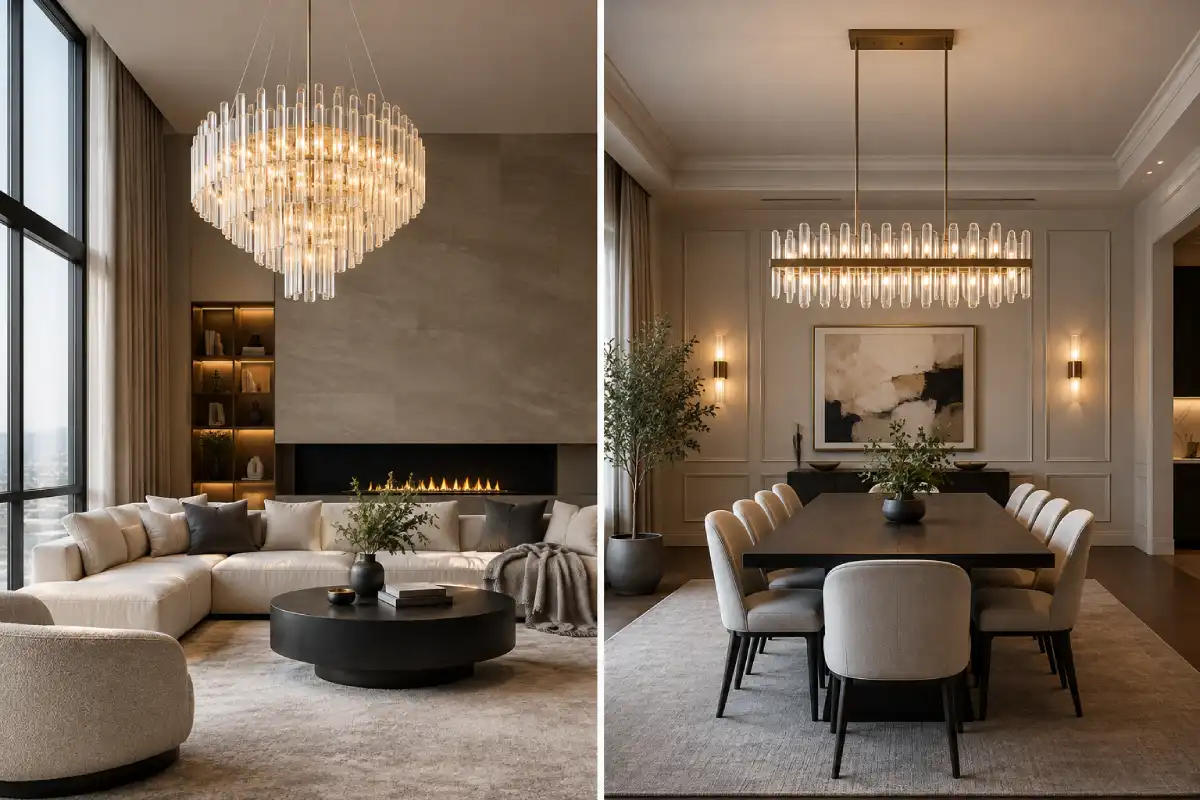
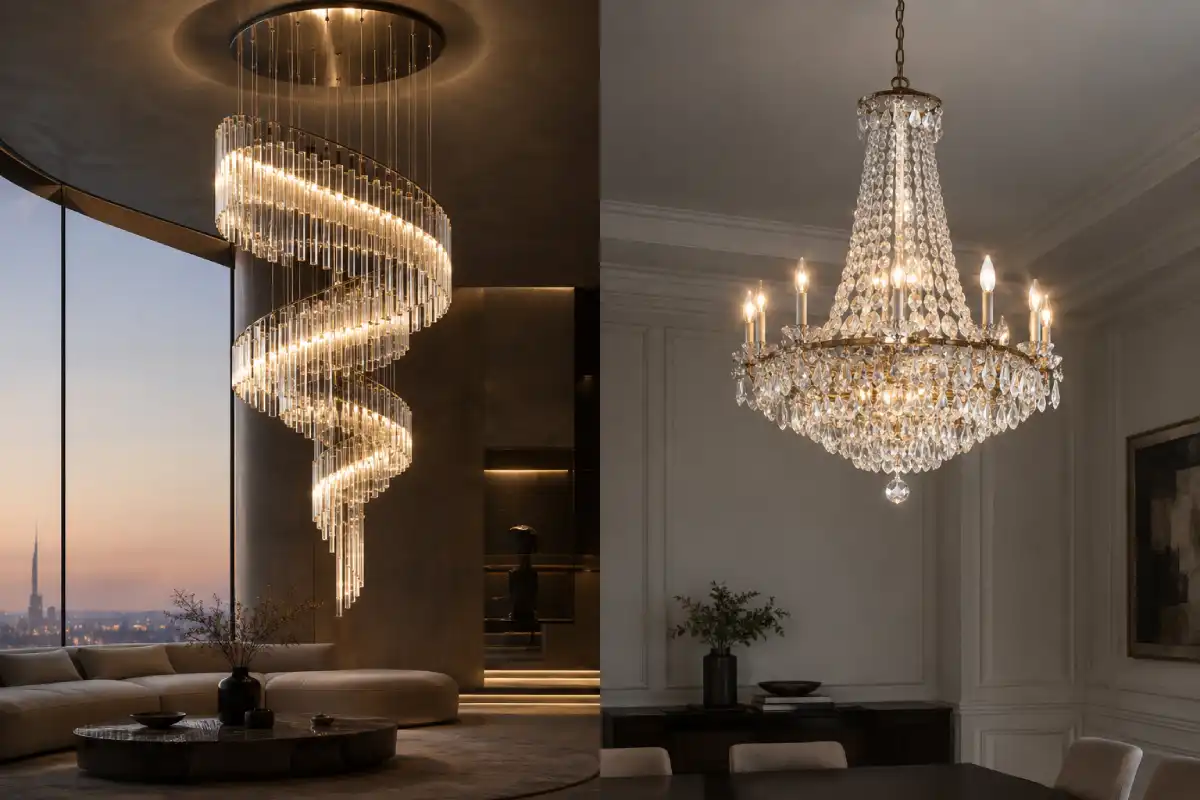
An off-the-shelf chandelier is built from a fixed design that a factory produces at volume, which is exactly what keeps the price reasonable and the delivery fast. Sizes come in a fixed range, built around ceilings that top out somewhere near four meters. Finishes are whatever the manufacturer put into production that season, not matched against any particular room. Most pieces in this category use crystal glass or a lower grade of lead crystal rather than full lead crystal, since cost scales directly with lead content and clarity.
That’s a reasonable tradeoff for most rooms, and there’s nothing wrong with the fixture itself. A catalog chandelier built well, hung correctly, and sized appropriately for a standard room does its job. The limitation shows up at the edges: these pieces are engineered for an average ceiling and a light-to-moderate load, and pushing them past that range is where problems start, since the piece was never designed for the room being asked of it.
Key Differences Between Bespoke and Off-the-Shelf Crystal Designs
Put the two side by side and the differences cluster around three things: what the crystal actually is, how much the design bends to the room, and how the piece gets made. The comparison below covers the practical differences, and each one gets more detail in the sections that follow.
| Factor | Off-the-Shelf | Custom / Bespoke |
|---|---|---|
| Crystal grade | Usually crystal glass or lower-grade lead crystal | Full lead crystal (30%+ PbO) specified for the project |
| Sizing | Fixed diameters and drop lengths from a catalog range | Calculated for the room’s exact ceiling height and proportions |
| Structural mounting | Standard junction box, light-to-moderate load only | Engineered mount matched to the piece’s actual weight |
| Design | Fixed shapes, a limited set of finish options | Tier count, form, and finish specified for that space |
| Lead time | In stock or a few weeks | Several months, including sampling, revisions, and hand assembly |
| Best suited for | Standard ceilings, secondary rooms, fast turnaround | Grand or architecturally unusual rooms, statement pieces |
Crystal Quality and Sourcing
Crystal for lighting falls into a few real categories, not just marketing language. Under the classification most of the industry still references, glass needs at least 24 percent lead oxide to be called lead crystal, and 30 percent or more to be called full lead crystal. That percentage isn’t decorative. Higher lead content bends light more, which is the physical reason a full lead crystal piece throws more color and sparkle under the same bulb than crystal glass cut to an identical shape.
Sourcing matters as much as the grade on paper. Two batches labeled full lead crystal can still differ in clarity, consistency, and how well they hold up over years of heat from the bulbs they’re meant to carry, depending on where the raw material came from and how tightly it was inspected before cutting. That consistency is why full lead crystal for a large commission usually comes from a small number of established suppliers rather than a local distributor’s general stock, since batch-to-batch quality at that grade is hard to guarantee otherwise.
Design Flexibility and Personalization
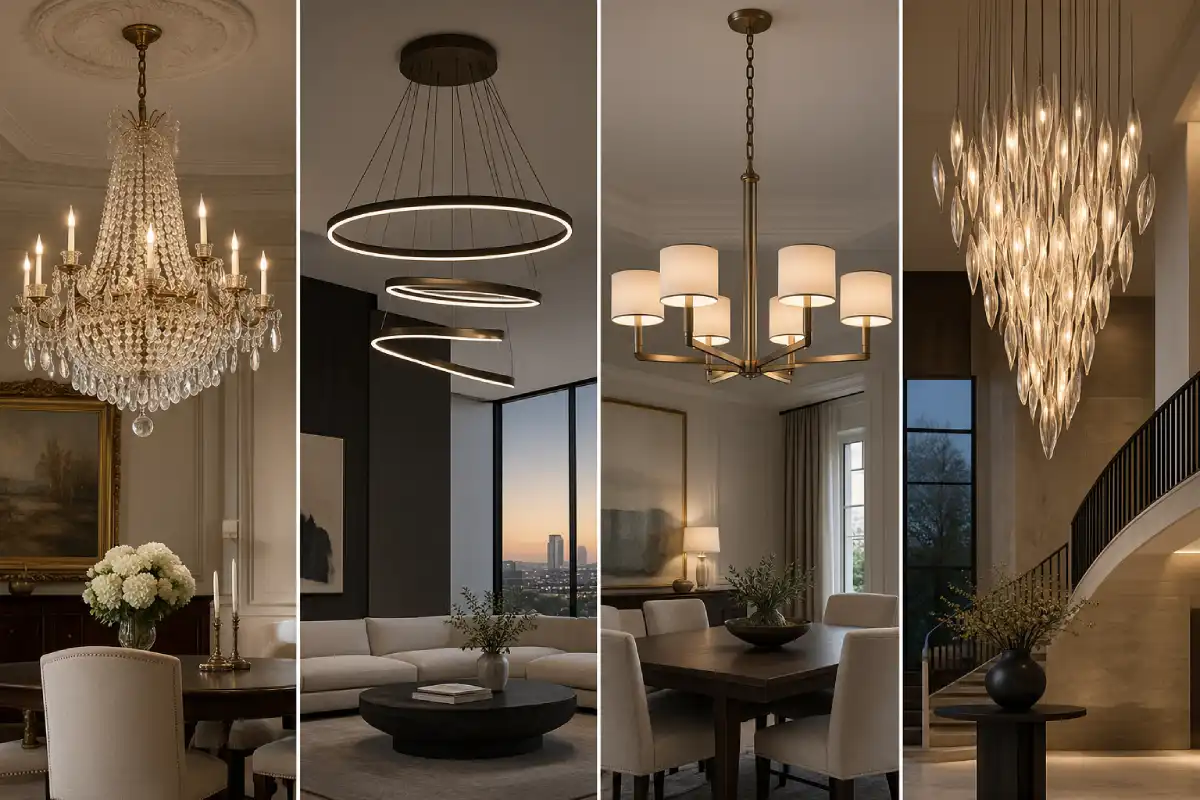
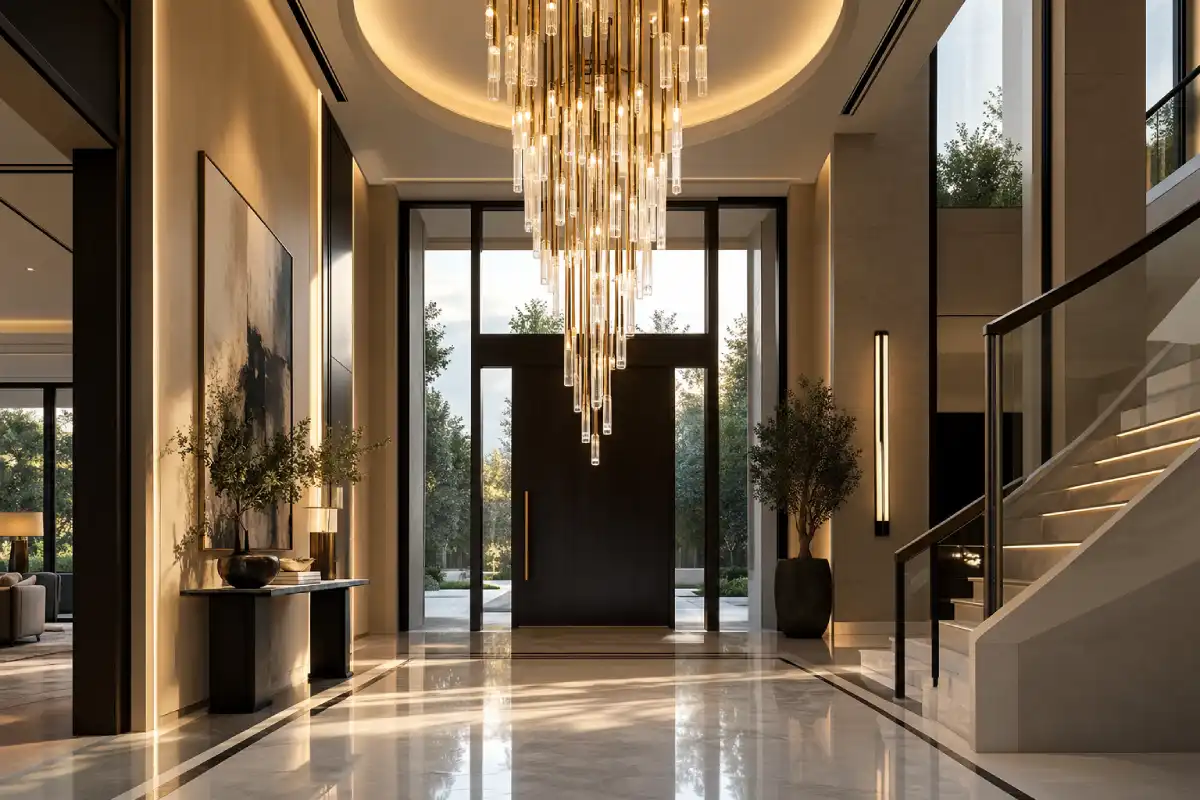
A catalog chandelier offers choices within a fixed structure: pick a finish, pick a size close to what’s needed, done. Bespoke design starts from the room instead of a catalog page, so tier count, overall form, and proportion all get worked out for that specific space rather than approximated from the closest available option. A domed foyer and a flat, high entry ceiling might both call for a similar four-tier design, yet the actual drop length, the way the tiers step down, and how the crystal catches light from different angles end up nothing alike once each room’s geometry gets factored in.
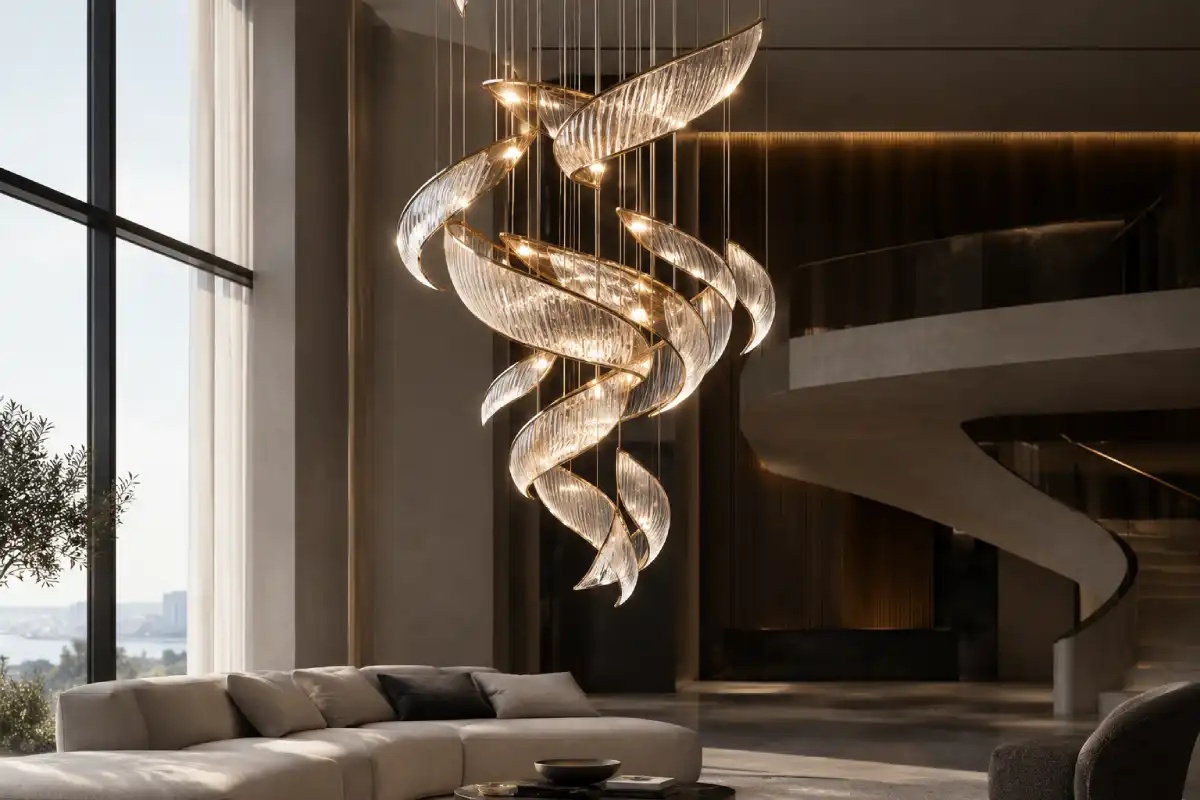
Personalization goes further than most people expect too. Clients can specify unusual proportions, mixed materials, a crystal cut that isn’t in standard production, or a finish matched to something already in the room, none of which is possible when the design already exists before the conversation starts.
Craftsmanship and Finishing
Off-the-shelf pieces get made through casting and machine-pressing wherever possible, because that’s what makes volume production affordable. Crystal elements come from molds, metal components get stamped or cast, and assembly follows a fixed process built for speed and consistency across hundreds of identical units.
A custom piece is largely hand-work from the crystal cutting through final assembly. Each element gets checked individually rather than pulled from a bin of identical parts, tiers get assembled and adjusted by hand to sit correctly at scale, and the finish gets applied and checked against the room’s actual materials rather than a standard color chart. That’s most of why a bespoke piece takes months instead of weeks. The design process itself is a small part of that total time. Most of it is hand labor that a factory line was never built to do.
Who Should Consider a Custom Crystal Chandelier
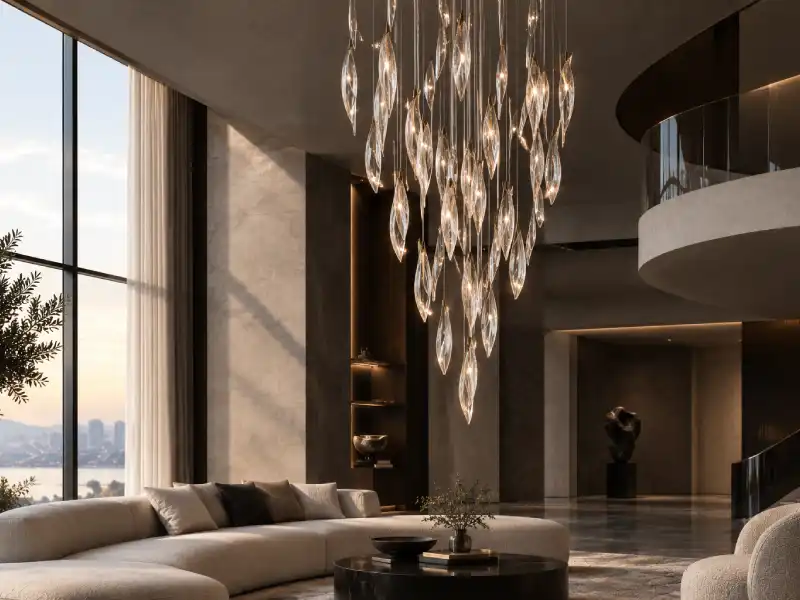
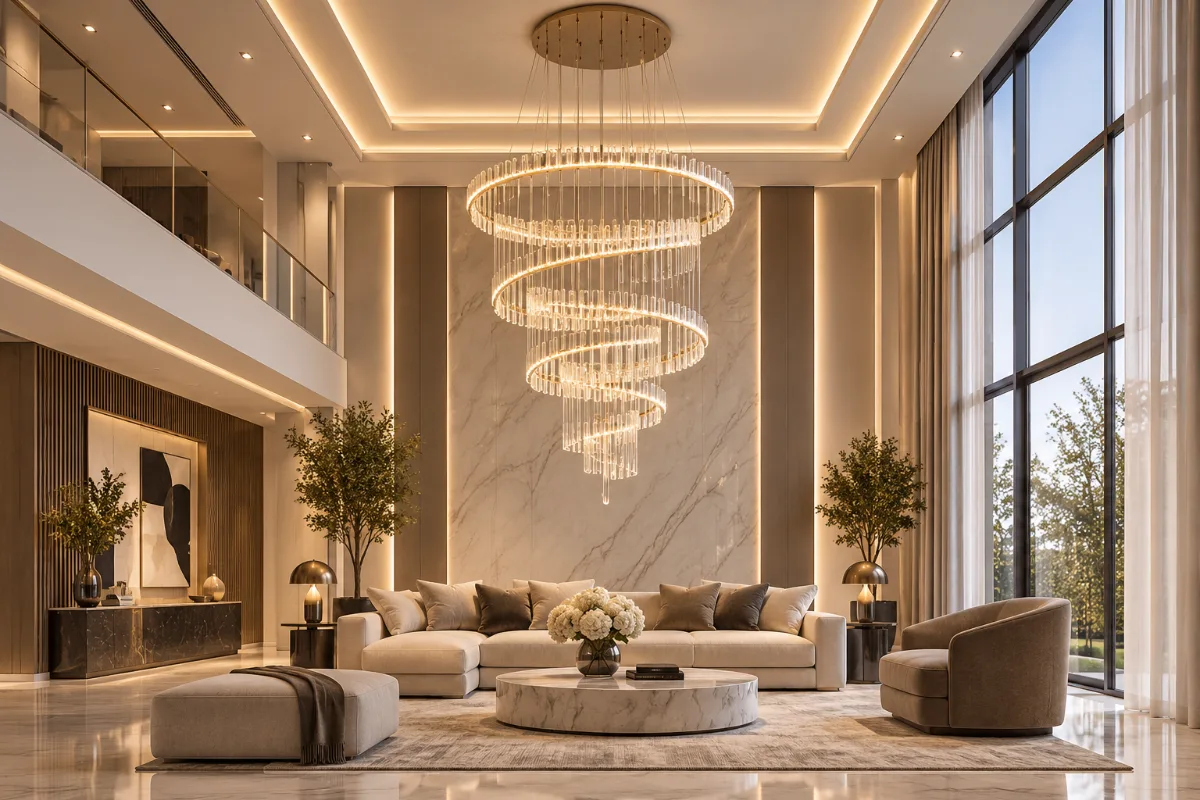
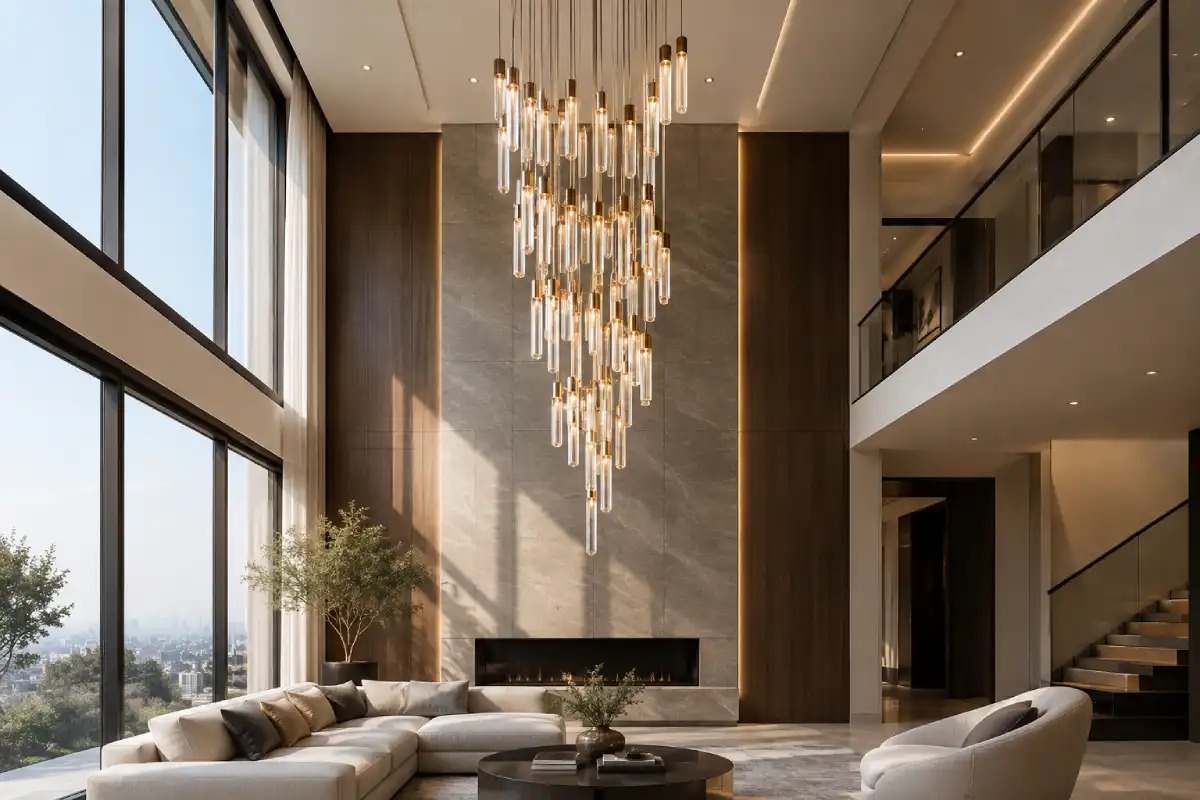
A custom crystal chandelier makes sense once a room has enough scale or architectural detail that nothing in a catalog fits it properly: a double-height entry, a ceiling with an unusual shape, a staircase or mezzanine that changes the sightline to the piece from multiple angles. It also makes sense for anyone who wants a piece that doesn’t exist anywhere else, which matters more for a hotel or a business building a specific identity than it usually does for a private home.
It’s a reasonable decision for a private residence too, just a less automatic one. A standard living room with a standard ceiling rarely needs bespoke crystal to look finished, and there’s no shame in a well-chosen catalog piece doing that job well. The clearer case for custom shows up once the room itself is already unusual, since at that point a catalog piece has to compromise somewhere and a bespoke one doesn’t have to.
What to Expect When Commissioning a Custom Crystal Piece
Commissioning starts with information, not sketches: room dimensions, ceiling type, existing finishes, and what the space actually needs to do day to day. If a specific crystal grade or cut matters to the client, that gets locked in early too, since sourcing full lead crystal from a particular supplier can add real time to the schedule if it’s decided late.
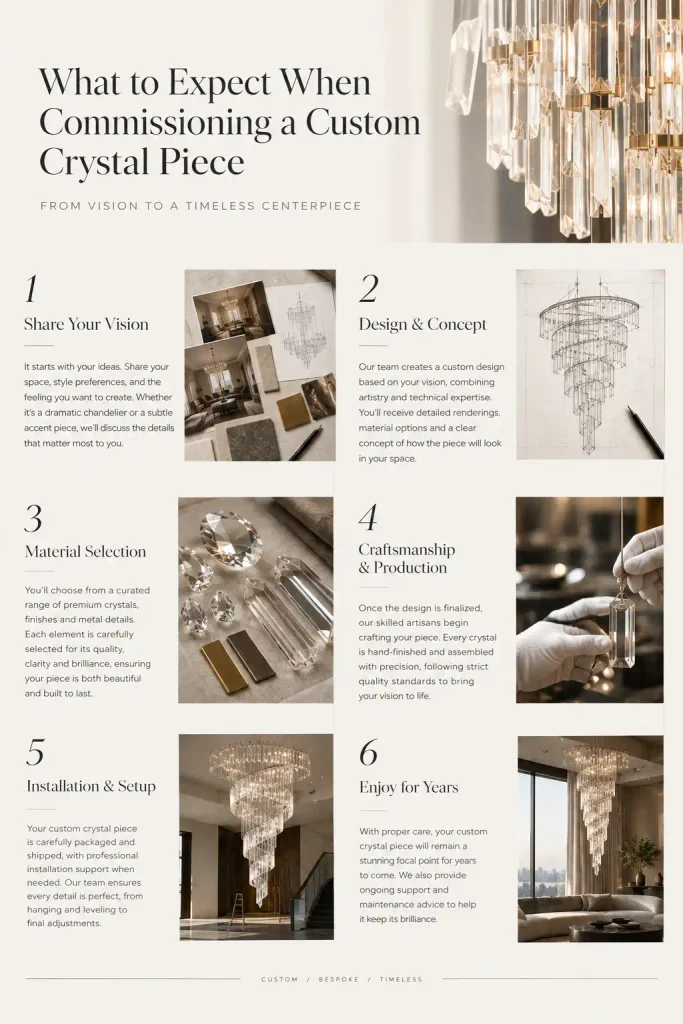
Crystal samples usually go out for approval before cutting begins in earnest: color, clarity, and cut checked against the room’s own light rather than a supplier’s spec sheet, since a sample that looks right under showroom lighting can read completely differently once it’s under a client’s actual fixtures and daylight. Proportions and drop length get confirmed the same way, checked against the real room rather than approximated from a floor plan.
Cutting and assembly begin only after that approval, and this is where the schedule stretches out the most. Hand-cut crystal, hand-finished metalwork, and tier-by-tier assembly take real time, and rushing that stage is usually where quality problems start. Delivery and installation happen last, with the mounting checked against the structural plan agreed at the very start.
For anyone weighing whether a custom crystal piece makes sense for a specific room, Lorenzo Home starts with a straightforward walkthrough of what the space actually needs and what getting there would cost, in Dubai or from photos and measurements for a project further away. Not every room needs it, and that’s the answer Lorenzo Home gives when it’s the honest one.